
“AI could become an unexpected driver of open science practices”
Till Winkler on openness, research culture and the next generation of scientists
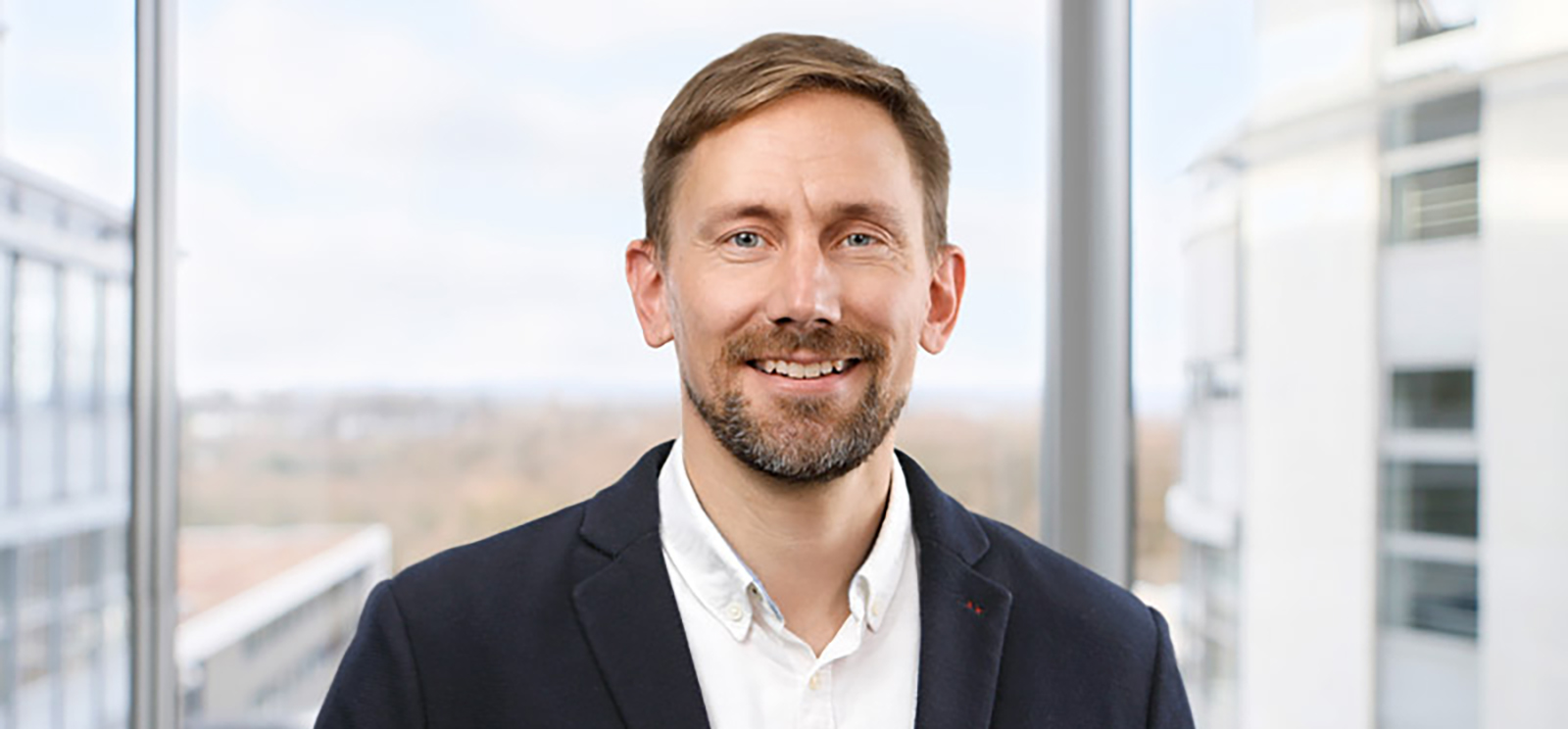
Photo: Hardy Welsch
The three key learnings:
- Even with sensitive corporate data, open science is often more feasible than it initially appears. Provided that issues regarding usage, anonymisation and transparency are clarified at an early stage and both sides are willing to seek practical solutions.
- For Open Science to become part of everyday research practice, it must be taught to early-career researchers at an early stage and in a practical way – not as a guiding principle, but as a concrete skill.
- Particularly in the face of increasing ‘fake science’, Open Science can contribute to quality assurance – not through rigid openness requirements, but through clear minimum standards for transparency, traceability and the disclosure of methods, code and materials.
How does your concrete, research-informed perspective on open science shape the topic from a business administration or business informatics perspective?
TW: From a business informatics perspective, the key point is that we are dealing with networked assets and highly interconnected structures. That is why I view open science less as a purely organisational or internal issue, but primarily as a cross-organisational question, and ultimately as an ecosystem problem. At its core, the question is whether and how Open Science practices and standards can be disseminated within the research community. This community is an open system. Although researchers work at different universities, colleges and research institutions, they are simultaneously in close contact and are often interconnected. It is particularly striking against this backdrop that research practices are, in many cases, not yet organised with the same degree of openness.
I certainly see parallels here with computer science, particularly regarding openness in open-source projects. There are numerous software projects that consciously choose to develop openly from the outset and use appropriate open-source licence models. Take Linux, for example, the open-source operating system on which a large part of the world’s server infrastructure runs today. Or the fact that Microsoft acquired GitHub in 2018 – one of the key platforms for global software development – already demonstrates the strategic importance that open source has come to hold. And companies such as Google are also investing considerable resources in open-source projects like Kubernetes, which is now regarded as the standard for operating cloud infrastructures. Openness is also a relevant topic with regard to artificial intelligence, which we will likely discuss later.
Yes, definitely.
TW: In the field of AI, however, it is becoming clear that the term ‘open’ is not always used with sufficient precision. There are providers such as OpenAI that call themselves ‘open’, but are in fact organised in a proprietary and closed manner. At the same time, there are open language models such as Meta’s Llama models, Mistral’s models, or the Chinese DeepSeek, which are freely available. In that respect, it can be said that the software industry is already further ahead than academia when it comes to openness. There, products and goods – be they software solutions or language models – are deliberately published and made freely accessible. This enables others to build on them, continue working with them, and develop new applications and new forms of value creation from them.
But would you say that this can actually be directly compared? If I imagine I am an employee in a company and we are told that we are moving away from Microsoft and will be working with OpenOffice in future, then my career does not depend on it. In that case, it is more likely that the tool will change rather than the logic of my work. For researchers, however, the situation is different. They work under considerable time pressure, have to hold their own in this scientific ecosystem, and if they fail to do so, it can jeopardise their academic careers. Would you still make the comparison?
TW: I find the comparison quite intriguing, but I would frame it differently. I would focus less on the level of software usage and instead compare the academic world with the software industry itself – that is, with an industry that produces knowledge in the form of software. After all, software, much like research publications or research data, can in principle be reproduced and reused as often as desired. When companies – and not just small initiatives or hobby projects, but also major players such as Google or Meta – invest significant resources in the development of software or language models and subsequently make these freely available, they do so for understandable strategic reasons. They create a foundation on which others can build, develop applications and create additional services.
In this respect, the software industry is ahead of the academic world in its practices and, to some extent, in its self-image and mindset. The idea of operating on the basis of a division of labour is more firmly established there. A foundation is provided, and others develop further offerings based on it . This is precisely where a potential point of connection for academia lies. We produce research results, we collect data as part of projects, and we publish on that basis. And at the same time, this data could also be reused by others. Other researchers could continue working with it, pursue new questions or link the data with other sources. This essentially corresponds to the idea of Open Science: not only using data and results for one’s own work, but also making them available to others and making research processes more transparent overall. In that respect, I consider the comparison to be thoroughly productive.
Yes, definitely. I hadn’t looked at it that way before. But the comparison is indeed insightful. It opens up yet another perspective.
TW: Open Science and Open Source are conceptually quite close anyway. In business informatics, there has been a broad strand of research on the topic of Open Source for many years. Numerous colleagues have been working on it for decades. In that respect, there is certainly a lot to observe there that could also be of interest to Open Science. What practices underpin such models, and what actually motivates software companies to make their code and software openly available? One possible reason is that value creation does not necessarily come from the sale of licences, but from services built on top of them. Meta, for example, invests considerable resources in the development of its Llama models and yet makes them freely available – because the actual business model lies elsewhere, namely in advertising and its own platforms. Companies are therefore making a foundation openly available and developing their business model elsewhere. Applied to science, this would also be an interesting prospect. Research data could be made openly accessible, whilst scientific institutions or researchers support others in building on this foundation, developing new research questions or conducting research using this data.
In your view, where does business administration stand on the issue of open science, both in practical terms and in terms of its attitude towards such approaches?
TW: I would say it’s still very much in its infancy. That said, things have certainly started to move in recent years. For example, many universities have set up central offices for open data or research data management. And a certain development can also be observed among journals. Open science practices such as the pre-registration of experiments or study protocols are increasingly being adopted and offered, at least as an option. However, when I look at the business administration community as a whole, I would say that these practices are not yet widely established.
My impression is also that other disciplines are, in some respects, further ahead and more mature in this regard. I work closely with colleagues from psychology in one of my research areas. There, certain empirical standards are already more firmly established in many respects. The same applies to medicine, where, for example, the pre-registration of studies has been standard practice for some time. Against this backdrop, I would say that business administration, particularly empirical business research, has so far been rather cautious when it comes to such practices.
Particularly in areas such as behavioural marketing or behavioural finance, the connection to psychology is obvious. One might therefore expect business administration to align more closely with transparent and reproducible research standards in these fields. Why, in your view, is the discipline nevertheless less advanced than psychology?
TW: A key difference probably lies in the structure of the disciplines. Psychology operates within a comparatively narrow and highly standardised methodological framework. In business administration, the field is thematically broader and methodologically more pluralistic; this is even more true in business informatics. Added to this is the fact that access to data also differs significantly. In psychology, the focus is often on the behaviour of individuals. And many studies can be carried out using relatively readily available samples, such as students or online panels, despite all the well-known limitations. In business administration, by contrast, we often study organisations, managers, experts or specific operational functions. Access to such fields is considerably more complex. I cannot really use student samples if I have research questions concerning managers.
This has implications for research practice. Someone who can recruit several hundred participants via standardised tools works under different conditions to someone who, for example, needs to gain access to executives within companies or to specific operational functions such as marketing, sales, production, logistics or IT departments. That is why standards cannot always be applied one-to-one. It also makes a difference whether I want to recruit 100 students for an experiment or 100 CEOs of DAX-listed companies. At the same time, qualitative and exploratory research plays a greater role in business administration, just as it does in business informatics. Such approaches are, by their very nature, more difficult to standardise than strongly hypothesis-driven confirmatory designs. In this respect, the discipline needs, on the one hand, more flexibility, but on the other hand, of course, still a high degree of transparency and methodological rigour.
Would you say that this is one of the central problems here? If I understand you correctly, it is often extremely time-consuming to collect such data in the first place, for example through interviews with executives. And once this data is available, there is probably little willingness to share it immediately, because researchers want to make scientific use of this laboriously acquired data themselves first.
TW: That is a valid point. If data can only be made accessible or collected at considerable expense, then we need to discuss incentive structures. What incentive do researchers have to make painstakingly acquired data immediately openly available after an initial publication? I consider that a legitimate question. You write in your book *Expedition Open Science Land* that data should be published once the study is complete. But in practice, it is often far from clear when a study can actually be considered complete. Particularly in qualitative research, many work over extended periods with accumulating data sets that are fed from various sources over the course of years. In such cases, the project is not concluded with a single publication. That is why we need to look closely at open science. In my view, the demand that all research data must be disclosed in full, immediately and at any time, falls short. For, particularly in the case of data collected through extensive research ( ), the appropriate recognition of this effort is a legitimate aspect that open science concepts must take into account.
Hardly anyone would likely demand such a rigorous approach. The incentive structures within the academic system are well known, as is its competitive nature. Anyone who has gone to great lengths to collect data will find plenty of reasons not to share it straight away. But perhaps the discipline needs to focus more on how traceability can be made possible even under more difficult circumstances. After all, the ultimate aim is to ensure that research remains accessible. If the simple approach isn’t feasible, then more complex solutions are needed. Perhaps different deadlines, different models or different forms of access are required. Let’s move on.
TW: Gladly.
We have already discussed key obstacles. In your view, does the bigger problem lie in the attitude of researchers or in a lack of structures and standards?
TW: I think the two go hand in hand: research culture and the institutional framework. So it’s as much about attitude and self-image as it is about standards, processes and appropriate structures. The crucial question then is where such changes originate and where the most effective incentives can be put in place. In my view, the most important lever lies with academic journals. The academic system is heavily geared towards publishing research in journals and at conferences. Academic journals define quality standards, they are ranked differently, and many who wish to advance within the system look to them for guidance. What leading journals introduce therefore has a good chance of becoming the standard within the discipline. If specialist journals trial new procedures, such as the pre-registration of experiments or studies, as is common in other disciplines, then these standards are more likely to become established in research practice. Anyone wishing to publish there will have to follow them.
After all, various stakeholders are involved in a journal, from the publisher and the editorial board to the reviewers. In your view, who initiates change there?
TW: Ultimately, it is primarily researchers themselves in editorial roles who initiate and drive such developments. Why should they do so? Because they have a vested interest in ensuring that their journal stands for high-quality and transparent research and gains prominence on that basis. Part of their professional identity is the commitment to safeguarding and further developing the quality of a journal. Open science practices such as pre-registration can contribute to this.
I can also illustrate this with a personal example: I am myself a section editor at Business & Information Systems Engineering (BISE), which emerged from the journal Wirtschaftsinformatik and now has an international focus. Some time ago, so-called Registered Reports—or pre-registered studies—were introduced there as a trial format. This wasn’t my idea, but I can see that a clear process has now been established for this and that this development is being closely monitored. The number of enquiries is still manageable so far, but the format is in place and is being used. What is interesting is that other journals in the discipline are approaching BISE to ask what experience we have had with this approach and whether anything can be derived from it for their own journals. This in particular shows how such diffusion processes work at the journal level. That is why there are certainly incentives for editors to introduce new practices here at an early stage.
When you said that journals are key players and that new standards spread into the discipline through them, I wondered: to what extent do journals look beyond their own discipline when it comes to such issues?
TW: That certainly happens. Initially, the focus is naturally primarily on one’s own discipline. There are established benchmarks, rankings and reference journals within that discipline to guide one. At the same time, however, those in charge of the journals certainly look beyond their own discipline. It is usually highly experienced and distinguished researchers who head up such journals; they know the publication system very well and often work across disciplines. Accordingly, they certainly keep track of developments in neighbouring fields.
This applies, for example, to psychology, which provides important foundations for parts of business administration and business informatics. From the perspective of business informatics, however, computer science itself also plays an important role. Platforms such as arXiv have long been established there, on which preprints are made publicly available even before formal publication. In the economic and social sciences, SSRN fulfils a similar function. The main idea behind this is to make research visible at an early stage and make it available to the community more quickly.
Such developments are also a concern for journals. They must, for example, decide how to deal with preprints prior to the actual submission. In my view, a middle ground is currently often being pursued here. Such advance publications are generally not ruled out, but nor are they explicitly required. This is because, on the one hand, they can promote transparency and visibility, whilst on the other hand they also touch on the question of what profile and unique selling point a journal claims for its published articles. So there is certainly movement in this field.
How do you view this preprint culture, as is familiar from economics, for example?
TW: Well, as we all know, the academic world moves slowly. As business IT specialists, however, relevance and timeliness are always particularly close to our hearts. Preprints are therefore a good way of making research visible earlier and bringing it into the professional discussion even before an often lengthy review process has been completed. Particularly in dynamic and socially hotly debated fields such as sustainability and AI, I consider this practice to be pragmatic and sensible.
From your perspective as a business IT specialist, what else can the open science movement learn? What needs to happen for such changes to take hold — beyond the role of journals?
TW: As mentioned at the outset, the topic of open science is about a process of change at the level of an entire scientific community, ultimately an ecosystem. That is why it is worth viewing open science more as a standardisation problem. The central question then becomes: how do new standards become established, and why do they sometimes fail to do so? A crucial point here is the bootstrapping problem. Standards often only realise their value once they are used by a critical mass. The more widely they are accepted, the more attractive they become for individuals. This is a classic network effect. We recognise this from private communication. If everyone is on WhatsApp, I’m left out if I only want to send text messages. Yet this critical mass has not yet been reached in many areas of Open Science, neither on the part of journals nor on the part of researchers. However, once this tipping point is crossed, the development can accelerate very quickly. Then, in certain areas – such as experimental studies – it will likely become difficult to ignore established practices like pre-registration.
I get the impression that within the Open Science debate, the focus is currently primarily on reproducibility and traceability.
TW: And that brings us straight to the topic of artificial intelligence. I believe that almost all journals have observed a significant increase in submissions over the past two to three years, probably even more so at conferences than in academic journals. AI simply makes it easier to produce manuscripts. However, this also brings questions of robustness, traceability and scientific integrity more sharply into focus.
There have, in fact, already been cases where fragments of prompts have inadvertently remained in submitted or even published texts. Such examples highlight just how important transparency regarding the research process has now become. Against this backdrop, it is only logical for journals to place greater emphasis on requesting supplementary materials, such as datasets or analysis code, during the review process and to encourage their provision after publication, for example in the form of online appendices or links to external platforms. In my view, this has so far been done predominantly on a voluntary basis, but is clearly becoming more important. This in particular offers a concrete opportunity to ensure traceability even under changing conditions.
On the one hand, there has been the Open Science movement for several years now, which, as you say, has so far developed rather gradually. On the other hand, we have seen strong momentum in the field of artificial intelligence for about three years. How do these two developments relate to one another?
TW: I certainly see a connection between the two developments. The research and writing processes accelerated by AI, the growing number of submissions, and also concerns about quality and scientific integrity are increasing the pressure to make research more transparent and robust. In this sense, AI could become an unexpected driver for the spread of open science practices . After all, many of the tools we have discussed – such as Registered Reports, pre-registration, the disclosure of data sources or supplementary materials – serve precisely to ensure traceability and to at least make problematic practices more difficult or more visible. In that respect, I would rather expect – and I almost have a little hope – that developments in the field of AI will give the topic of open science an additional boost – perhaps not immediately and not equally everywhere, but in a way that further drives the debate on transparency and robust standards.
In your view, what would be the second most important lever, after journals, for establishing open science as the standard?
TW: I think the second key lever is the next generation of researchers. If open science practices are to become widely established, we need to start with those who are still at the beginning of their academic careers. My observation is that each generation of researchers must meet higher standards to hold their own within the scientific system. At the same time, however, new technologies are expanding the scope of what is methodologically possible. Some will still vividly recall what research processes used to look like – without electronic databases, without online panel surveys, without digital collaboration across national borders. That is why I am quite optimistic that much of what we are discussing here could soon become second nature to younger researchers, such as providing datasets and analysis code during the review process, publishing online appendices, or using external platforms.
I’d like to ask about that. Let’s say I was 25 and doing my PhD with you. How would I actually know which tools and practices are relevant for this? Who would teach me that?
TW: Training is the key to this. Universities can certainly play a role here, for instance through graduate schools, structured PhD programmes, or centralised advisory services for PhD students. Open Science should be explicitly addressed in these settings: how such practices work, what platforms are available, and what requirements are involved. After all, one must not underestimate the effort involved. It’s not just a matter of a few extra steps, but of a different understanding of the research process. Up to now, research has often proceeded by starting with a phenomenon, developing initial hypotheses, collecting data, and only formalising the process more rigorously afterwards. Open science practices such as pre-registration, on the other hand, require that, even before the actual data collection begins, one records very precisely which questions are being investigated, how one intends to proceed, and which hypotheses are to be tested.
This means, initially, more effort at the start of the research process. At the same time, this is precisely where the opportunity lies. Those who refine their research design at an early stage and seek feedback on it increase the likelihood of producing robust and publishable results in the end. In this respect, it is not just extra work, but often also a form of better research preparation. However, one should also bear in mind that this shift in thinking is particularly difficult for those who have been working within established routines for many years. That is why I would say: those doing a PhD now have an advantage over the older generation – because they can learn Open Science from the outset as a natural part of their toolkit, rather than having to change existing habits.
I hear from many researchers that whilst pre-registration requires more planning initially, it can save time and money later on, for instance because you don’t first collect data only to realise that something else was actually needed. At the same time, however, I wonder: surely experienced researchers in particular should be particularly well placed to change their routines and break new ground, shouldn’t they?
TW: That’s an optimistic view. Those who are already firmly entrenched in the system often lack the greatest incentive to fundamentally overhaul established working methods. That is precisely why early-career researchers are the crucial starting point. We need to provide these researchers with the appropriate tools and make it clear how Open Science works in practice, which journals support or require such practices, and what this means for their own research. Above all, this involves thinking through research projects very carefully from the outset.
In my view, this is also an advantage when it comes to supervision. I expect my PhD students to clearly describe their projects in advance and think them through conceptually before they get started. Open Science essentially just takes this principle further. This can help to avoid unnecessary delays and use resources more effectively. At the same time, one should not misunderstand Open Science. Research remains an iterative process. Research questions evolve, designs are adapted, and new data may become necessary. The difference is that such changes must be made more transparent and justified. This is precisely where the additional effort lies, but it also brings a gain in traceability.
If I were to ask you, as one of your PhD students, what the specific benefits of Open Science practices are, what would you say? What do you consider to be the most important points?
TW: Firstly, they reduce the risk that a research project will ultimately fail or fail to yield the hoped-for insights. Those who invest more time in conceptual planning at the outset, document the approach precisely and, ideally, seek feedback early on, increase the likelihood that the project is methodologically sound. Secondly, open science can also serve as a signal on the academic job market, particularly for early-career researchers. Those who work with such practices demonstrate that they are familiar with current standards and conduct research in a way that is compatible and professional. And thirdly: it increases the chances of publishing in reputable journals. These points are, of course, interlinked. If quality improves and the research process becomes more transparent, this also enhances the conditions for a successful publication.
Thank you very much!
The interview was conducted on 17 March 2026 by Dr Doreen Siegfried.
This text was translated on 26 May 2026 using DeeplPro.
About Prof. Dr Till Winkler
Till Winkler is Professor of Business Administration, specialising in Information Management, at the FernUniversität in Hagen. He obtained his PhD in Business Informatics from Humboldt University in Berlin in 2012. Prior to this, he studied Information Management at the Karlsruhe Institute of Technology and worked as a consultant at Capgemini. Further career moves took him to the Stevens Institute of Technology in the USA and to Copenhagen Business School, where he served as Assistant and Associate Professor and as Associate Dean for Digital Learning.
Contact: https://www.fernuni-hagen.de/bima/team/till.winkler.shtml
ORCID.ID: https://orcid.org/0000-0002-3944-7390
LinkedIn: https://www.linkedin.com/in/tillwinkler/