
“Open Science is a matter of scientific credibility”
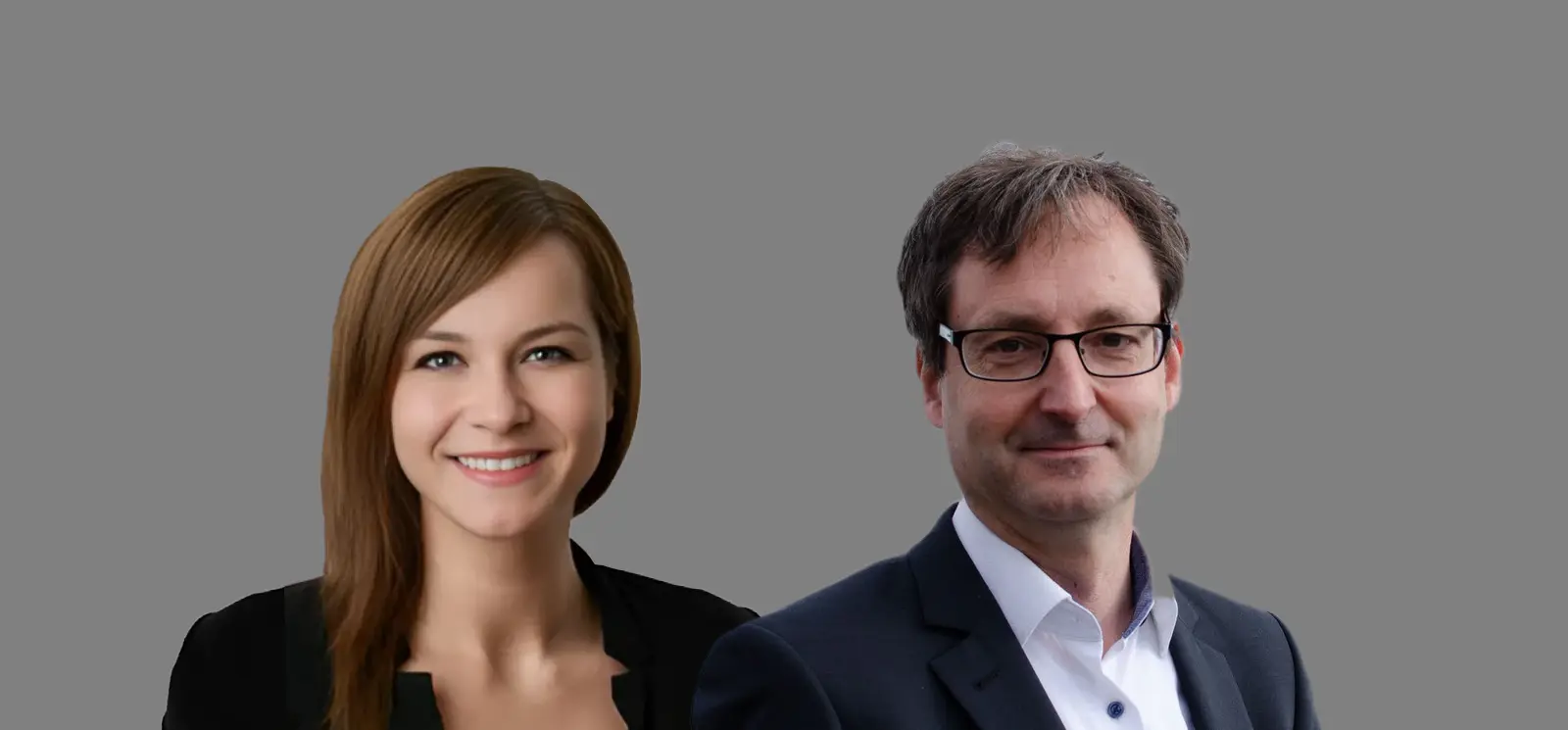
Stefanie Habersang and Markus Reihlen on Open Science in qualitative business research
The three key learnings:
- Open Science is not an afterthought, but part of good scientific practice. It is not just about publishing an article in Open Access at the end. Open Science concerns the entire research process. After all, making the process of how a study came about transparent increases the traceability and thus the credibility of one’s own research.
- In qualitative research, Open Science means, above all, transparency. Transferability and traceability are crucial.
- Open Science in business administration cannot be driven by individual researchers alone. It requires repositories, open-access models, clear standards in journals, and doctoral training that integrates Open Science with research ethics.
When did you first become aware of the topic of Open Science? Was there a specific occasion, a particular moment?
SH: Yes, there actually was. I first came into direct contact with Open Science as a PhD student. At the time, I had published an article together with Markus and other co-authors. It was only afterwards that I really realised this article was behind a paywall. That was a real eye-opener for me. I realised that the research we were working on wasn’t freely accessible to many people at all. It’s held by publishers who restrict access, even when that research was publicly funded. I found that hard to fathom.
What was even more baffling to me was that we ourselves had to pay a considerable sum to make the article available via Open Access. At that moment, I understood that this was not just a technical issue of publication, but one of structures. Who can read scientific findings? Who decides on access? And why do researchers have to pay for their work to become publicly accessible? The issue has stayed with me ever since. Later on, I deliberately set aside funds time and again to be able to publish articles in Open Access. Another important point for me was when our university began to promote Open Access institutionally. That was, if I remember correctly, around 2020.
MR: In 2003, I founded the Cologne-based scientific publisher together with two colleagues. As far as I understand, it was one of the first open-access scientific publishers in Germany. Our approach was unusual at the time. We did not claim the authors’ rights for ourselves. From an economic perspective, that wasn’t necessarily the obvious choice, as the traditional business model of many publishers is based on acquiring rights and subsequently exploiting them. But we wanted to take a different path. The publisher was intended by academics for academics. Anyone who published with us simply granted us the right to distribute their work. The authors retained their rights and could make the same work freely accessible in parallel, for example as a PDF on their own website. We didn’t use the term ‘Open Science’ back then. But the basic principle was exactly that. Science should be accessible. For me, that also meant that authors must retain the freedom to disseminate their own work without having to buy back rights or ask for permission.
What is needed for business studies to become more actively involved in Open Science? Is it primarily a question of mindset, of education — or is it more a lack of infrastructure?
MR: I don’t think you can separate culture and infrastructure here. We need both. On the one hand, we need a shared understanding of what Open Science can actually mean in business studies. This varies depending on the research tradition. Quantitative research raises different questions than qualitative research, and organisational research raises different questions than, say, accounting or marketing. That is why Open Science must be culturally embedded in the respective disciplines and sub-disciplines. This brings us very quickly to the issue of training. The question is, what role does Open Science play in doctoral training? Do early-career researchers learn early enough what Open Science means in practice? Not just as a principle, but also in day-to-day research?
The second point concerns infrastructure. If we want Open Science to be implemented, researchers also need structures that make this possible. This applies, for example, to publication channels, repositories, advisory services or funding models. My example with the publisher essentially shows that we need low-threshold, reliable and well-functioning publication infrastructures. In my view, this is still lacking.
SH: I would agree with that. We need both: infrastructure and a cultural shift. And I would like to emphasise the training aspect once again. Here at the University of Lüneburg, for example, we have a research ethics seminar as part of our PhD programme. This is precisely the right place to embed the topic effectively, as open science is closely linked to research ethics. It’s not just about how I collect data, but also about what happens to that data afterwards. Can I reuse it? Can I make it transparent? Can I process it in such a way that other researchers can work with it?
In qualitative research, this is particularly challenging, but also highly relevant. There are colleagues who make interviews available under certain conditions and prepare them for later use. Such questions should not be asked only at the end of a project, but as early as possible – both as a research team and as an individual researcher. How do I conduct interviews in such a way that they can be reused later, whilst upholding ethical standards? How do I document the research process? How do I prepare the data? And how might this lead to a dataset that can be made accessible, at least in aggregated form or in parts?
This is also interesting with regard to qualitative meta-analyses. In business administration, there are now many good case studies, particularly in areas such as organisation, innovation or entrepreneurship. Qualitative research has become much more visible in these fields. But we still make too little systematic use of this material. The question would be: what can be identified if we consider these case studies together? Are there overarching patterns that point beyond the individual case? This is precisely why Open Science should be more firmly embedded in doctoral training. The aim is to show that Open Science does not begin only at the point of publication. It concerns several stages in the research process: data collection, data preparation, documentation, potential re-use, the synthesis of existing studies and, ultimately, of course, the question of where and how to publish.
If qualitative research is integrated more closely into the Open Science concept, where do you see blind spots?
SH: Qualitative research is very diverse. That is why we need to distinguish precisely what form of research we are talking about. In the case of ethnographic studies or very in-depth investigations within a specific context, openness is more difficult to implement. Such data often cannot be easily separated from their context. Anyone wishing to work with it needs a precise understanding of the field, the situation and the relationships from which the data originated. In such cases, open science does not necessarily mean simply making data available without context. It is more about cooperation. This means that researchers would have to join forces, explore contexts together and, where necessary, merge data.
The situation is different for comparative qualitative studies or larger interview studies. When interviews are conducted across multiple organisations, sectors or cases, data can, under certain conditions, be shared more readily or at least made available in aggregated form. Naturally, confidentiality, anonymisation and consent remain central. But not every analysis requires in-depth contextual knowledge of every single person or organisation.
This is precisely where I see potential. In organisational research, there are already colleagues who process interview datasets in such a way that they become usable for other researchers. One example would be interviews with managers on digital transformation processes within an industry. Such data, if carefully documented and protected, can also be relevant for further research questions. It is too simplistic to view qualitative research as generally difficult to share. The type of qualitative research is decisive. In highly interpretative, ethnographic studies, the hurdles are higher. In larger interview studies or comparative case studies, there are significantly more opportunities to make data transparent, prepare it for reuse, or at least create forms of collaboration.
Many journals and funding bodies now expect research to be traceable and, as far as possible, reproducible. How can this be applied to qualitative research projects, which involve transitions, situational adaptations and emergent findings? Is it sufficient to share interview guides or synthesised data? Or are other forms of transparency required?
SH: Most qualitative researchers would probably reject the term ‘replicability’ for their research, at least if it is understood to mean that a case can be repeated one-to-one. In qualitative research, we tend to speak of ‘transferability’. A case can therefore provide insights that are transferable to other contexts. But it cannot simply be repeated under identical conditions.
This is linked to the research design. In quantitative research, replicability is more firmly established, through samples, measurement instruments and standardised procedures. Qualitative research works differently. Often, it concerns a case that is interesting precisely because it is unique, unusual or theoretically illuminating. Sometimes it is an exceptional case in which certain mechanisms become particularly clear. These mechanisms can then be theorised. In other contexts, they may occur less strongly, differently or under altered conditions. But the original case remains context-specific. This is precisely where its power of insight lies.
Transparency is therefore more important than replicability. This is an area where qualitative research can and must improve further. This includes disclosing how the sample was constructed, how interviews were conducted, how the guide evolved during the research process, and how the analysis was carried out. Interview guides are often adapted, particularly in qualitative projects. In the first wave of data collection, questions may be asked differently from the second, because the analysis has revealed new areas of focus. This is not a methodological problem, but part of an emergent research process. What is crucial is to document this development in a way that is transparent and traceable.
This is why detailed appendices are becoming increasingly important, containing interview guides, information on sampling, descriptions of the research process, coding manuals or examples of coding. Such materials do not all need to be included in the article itself. However, they should be accessible so that others can understand how the authors of a study went about their work. This does not mean that full transcripts must be published. Particularly with confidential interview data, this is often not possible or justifiable. But qualitative research can certainly make it clear on what basis it arrives at its findings without disclosing sensitive data.
MR: A good example is our joint project on digital transformation in a large multinational company. This is a very interesting case, but it is, of course, highly context-specific. Other companies experience digital transformation under different conditions, with different structures, different historical developments, different power dynamics and different technological starting points. That is why this case cannot simply be replicated. To do so, one would need to be able to keep the contextual conditions stable. This is precisely what is hardly possible in organisations.
Nevertheless, one can learn something from the case. It can show which dynamics play a role in digital transformation, which tensions arise, or which mechanisms might also be relevant in other companies. That is the point of transferability: it is not the case itself that is repeated, but the insights gained from it that are transferred to other contexts.
This means that in qualitative research, we speak less of replicability or reproducibility, and more of traceability. Are there already standards for this? In other words, guidelines specifying which materials must be included in the appendix to ensure a qualitative study is traceable?
SH: There are individual journals that have now formalised such requirements to a greater extent. An important example is Administrative Science Quarterly. A few years ago, this journal introduced transparency guidelines for qualitative research. This certainly sparked discussions within the community, as it also entails a certain degree of technicalisation and standardisation of qualitative research. Some colleagues perceive this as a restriction, and this concern is not unfounded. However, the aim was not to make qualitative research replicable or reproducible in the strict sense. Rather, it was about ensuring transparency – that is, disclosing how data was collected, analysed and interpreted.
The appendix should then include, for example, details of which individuals or groups were interviewed, how the sample was constructed, which interview guides were used, or how the coding was carried out. In some cases, excerpts from interview transcripts or additional tables are also expected. So this is not entirely new for management research. But there is as yet no universal standard. Much still depends on the journal in question and also on the editors supervising a paper. They often decide how strictly such transparency requirements are enforced.
When you look at business administration and, in particular, organisational research: where do you already see productive developments towards open science?
MR: I certainly see movement. One example is the VHB conference we organised in Lüneburg. There, we developed a new format, the so-called iWKs. These discussions gave rise to curated articles that were later published in the Schmalenbach Journal of Business Research. One of these articles dealt with Open Science. This shows that the topic is gaining traction in business administration. A group of colleagues has come together to take up and continue this discussion. Marko Sarstedt, in particular, has been a driving force behind the topic. The result is an excellent article which I would say every PhD student should read.
The article takes a particular perspective that draws heavily on psychology and quantitative research and is now also influencing business administration. You don’t have to agree with every point. But it provides an important impetus that the discipline should engage with.
And the great thing is that a discussion is now getting underway that is extremely important and helpful. The key now is not simply to adopt Open Science from other disciplines, but to adapt it to the various research traditions within business administration. Quantitative research, qualitative research, organisational research and marketing each have different requirements and, in some cases, call for different solutions. It is important that we do not narrow the topic down to Open Access. Open Science concerns the entire research process, meaning study design, data collection, documentation, analysis, publication — and also the culture of peer review. In all these areas, business administration can become more open, transparent and accountable.
If you were to look five years into the future, to the year 2031, what would need to have changed by then for Open Science in business administration to have made real progress?
MR: At its core, this is a structural problem that has preoccupied me ever since we founded our publishing house. As a society, we invest considerable public funds in science. Researchers develop studies, write articles, review the work of others and thereby contribute to the quality of scientific publishing. These services are largely financed by public funds or provided by researchers free of charge. At the same time, we often hand over the rights to these results to commercial publishers. These publishers then sell access back to universities, libraries and, ultimately, to society. This is a model that is difficult to comprehend, especially as it is highly profitable for some publishers. By 2031, I would like to see us having significantly changed this system. Good scientific research, funded by public money, should be publicly accessible worldwide.
That means the Diamond Open Access model – research-led open access – would have become the norm, ideally.
MR: Yes, that would be a dream. Perhaps it is still a utopia at the moment. But it would be a direction I would very much look forward to.
SH: I think the biggest concern that troubles us is that our knowledge is disappearing behind paywalls. We invest a great deal of work in academic publications, as authors, editors and reviewers. In the end, however, this knowledge is often not freely accessible. That is why it would be important for Open Access to become much more established at the publication level. It is more complex when it comes to research design, particularly in qualitative business research. There, we work with different paradigms, methods and research interests. That is why there will probably be no quick, uniform solution.
Sharing qualitative data, in particular, is very difficult. It involves confidentiality, anonymisation, additional effort and also the impact on the interview itself. If respondents know that their statements might be shared later, they may speak more cautiously, even if the data is anonymised. A whole host of dynamics arise that one might then be unable to observe at all. That is why I would distinguish between front-end and back-end. At the level of publications , we need more open access. When it comes to data and research design, solutions need to be negotiated on a more project-specific basis.
Does open science already play a greater role in teaching and doctoral training in business administration today?
MR: Yes, doctoral training has changed significantly. I grew up in a traditional department-based system. Back then, standards were mainly passed on within individual departments. There were hardly any common, structured standards. We’ve come a long way since then. Many universities have structured PhD programmes in which ethical, methodological, epistemological and publication standards are taught. This raises the training to a higher level of reflection. Open Science should be part of these curricula. After all, the topic touches on several areas at once: research ethics, methodology, paper writing and publication strategies. One example is pre-registered studies. In qualitative research, these have so far played hardly any role. However, they could be useful for certain formats, such as qualitative meta-studies. In such cases, one could specify in advance how data will be searched for, selected and analysed. This would create transparency and ease the burden on the review process. It is precisely these kinds of issues that should be incorporated more strongly into doctoral training.
SH: It depends on what type of qualitative research we are talking about. For exploratory studies, pre-registration often makes little sense, because their research aim is precisely to enter the field with an open mind and develop categories only during the research process. The situation is different for confirmatory qualitative research. This also exists, and pre-registered designs could be useful for such studies. One could specify in advance which theoretical assumptions are to be tested, which cases are to be included, and how the analysis is to be carried out.
In qualitative research, this idea has so far met with little response. The focus remains strongly on exploration and novelty. Studies that confirm – or indeed fail to confirm – known patterns, test so-called ‘boundary conditions’, or show that certain correlations do not occur in other contexts, are often regarded as less interesting. This is precisely where a cultural shift is needed. We should also place greater value on qualitative studies that do not primarily aim to discover something new, but rather to test, refine or validate existing findings. This would help us to better understand which patterns are robust across different contexts and where their limitations lie.
We spoke about the limits of reproducibility in individual qualitative studies. What is the situation with qualitative meta-studies?
SH: The starting point is different for meta-studies. We work with studies that have already been published. This makes it clear from the outset what material we are drawing on. Researchers can explicitly disclose which studies were included in the synthesis, how the data was coded, and which analytical framework was used for the evaluation. Of course, there remains an interpretative step even in qualitative meta-studies. But if the theoretical perspective is clearly stated, it is possible to understand how the analysis arrived at its results. Under similar theoretical conditions, the line of reasoning should therefore be plausibly reconstructible. That does not mean that every analysis must lead to the same result. If researchers examine the same studies through a different theoretical lens, other aspects may come to light. That, too, is legitimate as long as it is made transparent which questions were asked, which sections were examined and which interpretations were made.
MR: Exactly. It is not a matter of applying individual standards that are comprehensible only to the researchers themselves. Scientific standards must be justifiable to third parties. Of course, in a meta-study, one can weight certain aspects differently or assess them differently. But one cannot claim that one’s own interpretation is entirely idiosyncratic. Science must present its methods, assumptions and conclusions in such a way that they are, in principle, comprehensible to others.
When you look at your meta-studies, do you feel freer thanks to Open Science because you can be more transparent?
SH: On the one hand, yes. Researchers can work very transparently, particularly with meta-studies. You can disclose which studies were included, how the data was coded and how the analysis is structured. On the other hand, you also come up against limitations. A qualitative meta-study can only work with the material available in the original studies. Often, one would like additional contextual information, but this has not been published or is not part of the article. Researchers therefore find themselves caught between a rock and a hard place. One’s own synthesis can be very transparent. At the same time, it remains dependent on how transparent the original studies themselves are. That is precisely where the limits lie.
What would you say to PhD students who ask you why they should engage with Open Science?
MR: Anyone who discloses how a study is designed, how data is collected and analysed, and what decisions were made during the research process makes the research comprehensible. This transparency is a prerequisite for scientific credibility. If I lack this transparency, then I am not credible.
SH: In my view, Open Science belongs firmly within research ethics training. Anyone working in science must also engage with issues of transparency, access and responsibility. These should not be treated separately from one another in training.
Thank you very much!
The interview was conducted on 21 April 2026 by Dr Doreen Siegfried.
This text was translated on 10 June 2026 using DeeplPro.
About Prof. Dr Stefanie Habersang:
Stefanie Habersang is an assistant professor of Digital Transformation at the Institute of Management and Organisation at the University of Lüneburg. She studied economics at Ruhr University in Bochum and business administration at the University of Cologne and the University of Sydney. She completed her PhD at Leuphana University in Lüneburg and was awarded the Leuphana PhD Prize 2021 for her work. In 2022, Ms Habersang conducted postdoctoral research at Copenhagen Business School.
Contact: https://www.leuphana.de/institute/imo/personen/stefanie–habersang.html
LinkedIn: https://www.linkedin.com/in/stefanie-habersang/
About Prof. Dr Markus Reihlen:
Markus Reihlen is Professor of Strategic Management and Entrepreneurship and Vice-President for the Professional School, Entrepreneurship, Transfer and Internationalisation at Leuphana University Lüneburg. From 2010 to 2012, he served as Dean of Studies at the Graduate School and held the position of Vice-President with various areas of responsibility from 2012 to 2020 and 2023 to 2024.
Following his undergraduate studies, PhD and habilitation at the University of Cologne, Prof. Reihlen held various academic positions, including as a visiting professor at the University of St. Gallen (2013), the University of Wisconsin-Milwaukee (2001/2002), visiting professorships at RWTH Aachen University (2007/2008) and the University of Mannheim (2008/2009), and as a visiting researcher at Copenhagen Business School (2000) and the University of Oxford (2008).
Contact: https://www.leuphana.de/institute/imo/personen/markus-reihlen.html
LinkedIn: https://www.linkedin.com/in/markus-reihlen-10594940/