
Proprietary data requires a graduated approach to transparency
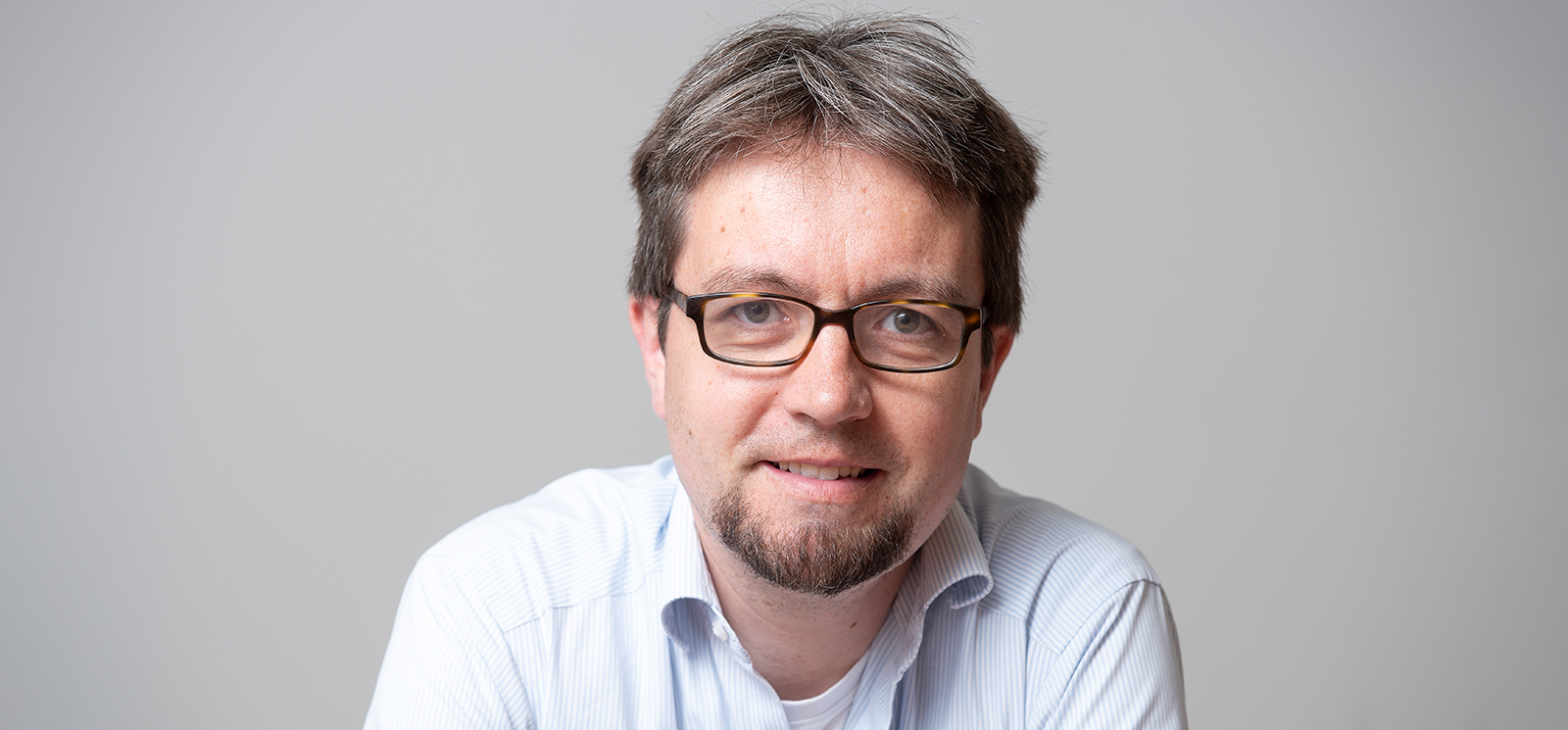
Joachim Hüffmeier on his experiences with open science
The three key learnings:
- Open Science has a direct bearing on business administration. The issue is whether business administration findings are robust, traceable and replicable. In business administration in particular, there has so far been a lack of systematic self-assessment of research practices.
- Corporate data is not a blanket counter-argument. Even with proprietary data, there is scope for manoeuvre: partial datasets, anonymised variables, synthetic data, code or documentation. The question is not: “Is open science even possible here?”, but: “What form of transparency is possible?”
- Replication requires its own structures and incentives, such as replication marketplaces. Replication would thus not appear as a secondary task of verification, but as a visible contribution to quality assurance.
Many researchers in business administration work with proprietary company data and sign confidentiality agreements. This is often driven by companies’ concern that, despite anonymisation, it is still possible to identify which organisation is involved. How do you respond when you find yourself in such discussions?
JH: If such an agreement has already been signed, it does indeed become difficult, especially when the confidentiality requirements originate from the company. However, I also observe that many colleagues are very willing to work with such agreements themselves at a very early stage. This is precisely where I see an opportunity for change.
In my experience, if you explain clearly to external partners the value of sufficiently anonymised and shared data, more is often possible than initially assumed. Many companies are quite willing to agree to data sharing if it is clear that sensitive information remains protected.
Another point is that data does not always have to be shared in its entirety. It is also possible to make only parts of a dataset accessible. Information that would enable the de-anonymisation of individual participants, organisations or companies does not have to be published. No one is forcing researchers to disclose such details. It is therefore not a black-and-white issue, but a field with many nuances.
And even if direct sharing of the original data is not possible, there are now alternatives, such as the creation of synthetic data. This allows datasets to be made available at least in a form that enables further use without disclosing sensitive information. If one looks at the literature, by no means does every publication in this field consist exclusively of sensitive corporate data. So there is certainly scope for implementing open science practices more widely in business administration too.
If I understand you correctly, this is also about routines and incentives within the academic system. Would you say that the publication of research data should initially be the norm, and that justifications would only be required where restrictions are actually necessary?
JH: Exactly. I don’t want to blame anyone individually for this. It hasn’t been properly regulated so far either. Preparing research data in such a way that it is comprehensible and usable by others takes a considerable amount of time. However, this effort often does not pay off immediately within the existing system. This differs, for example, from an application for third-party funding. There, it is clear what the effort is for and how it counts towards one’s academic career. The preparation and provision of data, by contrast, often takes on the character of voluntary work. In my view, that is problematic. If we, as a scientific community, truly want verifiable and reproducible research findings, we must also create the conditions for this. This includes ensuring that data sharing does not depend solely on the personal commitment of individual researchers, but is institutionally supported and recognised. The system must make it clear that this work is desired and is recognised accordingly.
Have you personally experienced any scientific benefits from sharing your data?
JH: Yes, there was an effect that was very valuable to me. We shared data, and this data was actually taken up during the review process and used to verify our analyses. One reviewer wrote that he had followed our calculations and could confirm our results. He also noted another interesting finding in the data and suggested that we might wish to report on this as well. So someone had really taken the trouble to check our data again. For us, this was an additional form of quality assurance. Someone from outside was able to verify that they arrived at the same results using the same data. At the same time, this outside perspective helped to add a further dimension to our findings. In my view, this alone shows how research can be advanced through data sharing. You gain an additional layer of scrutiny and, in some cases, can further enrich the substance of your own results.
You yourself have conducted research into open science practices in industrial and organisational psychology and in management. What do you consider to be the most important findings so far?
JH: Above all, we have investigated where academic disciplines currently stand in terms of openness and transparency, and why open science practices are not being implemented more quickly. We often see publishers passing the buck. Some say that, as editors, they cannot make the decision themselves and point to the publisher and its policy. A second pattern is the tendency to follow the lead of prestigious top-tier journals. Editors of less influential journals in particular often say: “We shouldn’t be the first. If the leading journals in the field embed open science practices more firmly, then we’ll follow suit.” From their perspective, these journals set the rules in the field. I find that interesting because it highlights a potential lever for change.
Added to this is the concern that open science does not suit all research approaches. This is mentioned particularly in relation to qualitative research. However, there is often still a lack of information in this area. After all, there are certainly open science practices for qualitative research, such as pre-registration templates, which have been developed in collaboration with the qualitative research community. So, for publishers, it is a mix of unclear responsibilities and the question of whether open science practices actually fit the respective research approach.
For researchers themselves, the reservations are often of a different nature. Concerns about additional bureaucracy, increased workload, or the fear that the research process might become less open and creative. Some also fear that mistakes could be more easily identified or that ideas might become visible sooner and thus, so to speak, be ‘stolen’. Another issue is the handling of one’s own data. Anyone with a dataset that has been painstakingly collected often wants to analyse it further themselves first. Behind this lies the concern that one might share something before having fully exploited its scientific potential.
Journals are an important lever in the scientific incentive system. Do you see other areas for action, for example in the training of PhD students?
JH: I believe there are several factors. The point about doctoral training is important. Many doctoral students enter academia with great idealism. They are often quickly convinced that open science practices make sense. And in some cases, they demand them themselves. In some cases, they are further ahead in this regard than the senior colleagues supervising them. This is certainly a good lever for ensuring that the field changes through growth or evolutionary processes. At the same time, I think it is important that as many different stakeholders as possible contribute to this change. The training and working methods of doctoral students are one starting point. Journals are another, very important and influential lever. In a sense, they actually shape a large part of our scientific world. A third area is external funding bodies. I am aware that institutional funding bodies in business administration and economics do not play the same role as in other disciplines. But funding organisations such as the EU, the DFG or, in the US, the National Science Foundation could certainly set standards. Much like the requirements for open-access publications of research results produced with EU funding, they could also formulate requirements for other open science practices. For instance, that certain studies are pre-registered or created as Registered Reports . The more stakeholders work together here, the sooner the change that is needed in many areas can take place.
The various stakeholders you have mentioned have different interests and motivations. Do these interests need to be better aligned? Or is that not the crucial point at all?
JH: I believe that governance in academia is a difficult and, at the same time, a sensitive issue. Difficult, because it is not easy to reconcile the differing interests of various stakeholder groups. Sensitive, because such governance quickly raises the question of whether it restricts academic freedom.
Looking at the publication market, however, I see two levers that have hardly been turned so far. The first concerns professional societies, universities and university consortia. Professional societies could play a greater role in many areas. They could take on responsibility for more journals, including more high-profile ones, and abandon their previous reticence. The same applies to universities and university consortia. At the moment, we are largely leaving the publishing sector to commercially motivated publishers. I consider this to be a problem. Professional societies, universities and university consortia could step into the breach more effectively here. They could provide funding, invest actively, create structures and also finance posts to establish an alternative publishing system.
At present, however, I see little movement in this direction on a larger scale. There are isolated initiatives. Journals that are managed and run by academics, i.e. ‘owned by academics and run by academics’, such as the independent peer review platform ‘Peer Community in’ (PCI). With a view to transparent, robust, open and reliable research, I consider this a very sensible approach. But so far, this has tended to happen on a small scale and on a trial basis. In my view, we talk about it too little and act on it too rarely. The second lever concerns the high fees that public institutions, universities and research organisations pay – and are willing to pay – either to be able to subscribe to journals or to be allowed to publish research articles at all. It need not be this way on such a scale. When one looks at the profits of major academic publishers such as Sage, Elsevier, Wiley or Springer Nature, the question naturally arises as to why public funds should continue to flow into such business models on this scale.
Last year, there was also the Leopoldina paper led by Diethard Tautz. It also argues that professional societies should take on greater responsibility within the publication system. From the operational discussions, however, I am particularly familiar with the question of funding. How do we move away from the existing publishing structures, how can an alternative system be established, and who pays for it? Where do you see potential solutions here?
JH: That is only partly true. If we continue to maintain the existing large budgets, for example within the framework of DEAL or similar agreements with the major academic publishers, then we cannot simultaneously build an alternative journal ecosystem. That is correct. Financing both at the same time would be unrealistic.
On the other hand, there are certainly examples showing that new journals do not have to be that expensive. Beyond the PCI platform mentioned above, I would like to cite two further examples from my immediate circle. In psychology, there is the journal Meta-Psychology. It utilises infrastructure from Linnaeus University in Sweden, which thereby helps to facilitate a progressive open-access journal. Furthermore, last year we founded a journal with colleagues that deals exclusively with replication research. This journal is supported by Münster University Library, not with a huge sum, but with a rather modest contribution.
That is why one should not derive the costs of an alternative publication system from the fees we currently pay to major academic publishers. That would be misleading. These publishers have high profit margins. Hosting a journal costs comparatively little today, and a large part of the academic work – such as peer review and editing – is usually carried out unpaid anyway.
It is unrealistic to finance two publication ecosystems in parallel on a permanent basis: the existing commercial system and, in addition, an alternative, research-driven system. It would be a different matter if a clear transition period were set and it were stated that in two or five years’ time we want to move away from this model. Then the funds could be reallocated gradually and invested specifically in new structures.
If one wanted to move away from the major prestige journals and focus more on new, open-access journals, this would need to be organised at an international level. How realistic is such a change?
JH: For that to happen, professional societies would need to agree internationally that they want to go down this route. From today’s perspective, that certainly sounds utopian. But I still think it makes sense to ask ourselves, in principle, whether these triple-A journals ultimately do us more good or more harm. I’m not sure about the balance of that. I publish in such journals myself whenever I have the opportunity. So I don’t want to claim that I am any more consistent or idealistic than others in this regard. But we should ask ourselves whether these journals really serve science, particularly in the sense we ascribe to them. We treat publications in such journals as a mark of status, reputation and scientific quality. They become insignia that play a major role in subsequent career decisions.
The problem is that we are working with proxies for scientific achievement. When it comes to appointments, the candidates’ work is often not read. When it comes to decisions on third-party funding, there is also frequently no detailed examination of what someone has actually published. Instead, we rely on where someone has published. In my view, this is not beneficial to science. Furthermore, studies in many areas show that articles in top journals are not necessarily better than those in less prestigious journals. In some cases, there are even more indications of questionable scientific practices in the latter. This means that, through these journals, we create enormous opportunities to gain social prestige whilst simultaneously providing incentives to behave questionably or, in extreme cases, unethically.
That is why it is worth at least considering whether we really want to maintain this system. Of course, this question does not stop at national borders, nor does it stop at disciplinary boundaries. But is this a good way to organise science, to publish, and to communicate with one another? I am not sure. And I believe that we should at least allow ourselves to consider this utopia as a theoretical possibility.
How can self-reflection on publication behaviour be brought more strongly into the academic debate within a discipline?
JH: I believe the first step is to raise awareness of the problem. This is lacking in many areas. What has been missing in business studies so far is a systematic examination of our own research practices and, in particular, the consequences these practices have. In psychology, we now have a fairly good idea of how replicable research is across different sub-fields. We have a better understanding of which research practices are used, what consequences they may have, and what might be problematic about them. A similar discussion is also taking place in economics. There, prominent findings from journals such as Science, Nature or PNAS have been taken up and subsequently examined to see how well they can be replicated. So this is happening at a very visible level.
In business administration, I have seen far less of this so far. Above all, there is still not a widespread awareness that one’s own academic practices must also be critically examined. It is not yet second nature to ask: Are our findings robust? Are they reliable? Are they methodologically as sound as they should be? The first step would therefore be to bring these two worlds together: business administration and research into its own research practices. We need more people in business administration who are interested in realistically assessing the status quo. My guess would be that such an assessment would reveal a number of problems. As a second step, this could lead to a greater willingness to acknowledge these problems and tackle them in concrete terms. After all, it would be surprising if business administration, of all disciplines, were the only social science discipline not to have such problems.
In your view, what is the scientific added value of Registered Reports or Registered Replication Reports?
JH: I believe this format has a bright future. I don’t want to paint too rosy a picture, as it certainly brings new challenges with it. Nevertheless, I consider Registered Reports to be a very important approach. It is now possible to empirically investigate what this format changes. To this end, studies designed as Registered Reports can be compared with studies that examine similar questions but were not published in this format. This reveals that significantly fewer confirmed hypotheses appear in Registered Reports. This is very important scientifically. Because it also makes it possible to publish results that show no effects or correlations. Such null findings then appear in the literature and highlight the fact that not every previously formulated hypothesis is confirmed by data, neither in experiments nor in correlational studies. Traditional literature, by contrast, can easily give the impression that postulated effects are very frequently actually found.
Several studies show that the rate of confirmed hypotheses in Registered Reports drops significantly, to around 40 to 50 per cent. This suggests that this format reduces publication bias and produces a more realistic picture of scientific findings. A second benefit lies in the quality of the studies. In the case of Registered Reports, the research project is reviewed at a very early stage, i.e. whilst it is still at the idea and study design stage. This allows reviewers to provide feedback before data is collected or analysed. This often leads to better-planned and methodologically more sophisticated studies. The third point is related to this. Registered Reports reduce incentives for questionable research practices. If a study receives ‘in-principle acceptance’ at the concept stage, it will generally be published later, provided the researchers adhere to the pre-defined research plan. This reduces the pressure to embellish results retrospectively or to adjust analyses so that they appear more publishable. Research becomes publishable regardless of the results, thereby removing many incentives to polish up findings retrospectively.
Why is pre-registration more than a formality?
JH: There are also studies on this that compare pre-registered studies with non-pre-registered ones. The findings suggest that pre-registration is more than just a formal addition. An initial indication comes from researchers’ own reports. Many report that pre-registered research is better thought out compared to non-pre-registered research. It is planned more systematically, is of higher quality, and fewer details are overlooked. Furthermore, pre-registration forces researchers to clarify in advance exactly what their theoretical rationale is and which analyses they intend to carry out. When comparing the quality of such studies, it is also evident that pre-registered research is often of a higher standard. This is likely due to the fact that researchers engage more intensively with the research question, hypotheses, methodology and analysis before data collection begins. A third point is that fewer errors are found in pre-registered studies than in non-pre-registered studies.
Why do pre-registered studies contain fewer errors?
JH: Researchers have investigated this through comparative studies. They compared studies that were pre-registered with those that were not. In these analyses, pre-registered studies showed fewer errors. This is likely due to the greater care taken in planning. Even in pre-registered studies, at least in some cases, fewer hypotheses are confirmed than in non-pre-registered studies. This reveals a parallel with Registered Reports. Pre-registration is therefore much more than a bureaucratic requirement. It changes the way research is planned, conducted and subsequently reported.
There are critical voices who say that pre-registration makes sense for experimental studies, but is too restrictive a framework for exploratory research. How do you respond to that?
JH: I consider that to be a misunderstanding. The crucial distinction is between exploratory and confirmatory research, that is, between open-ended questions on the one hand and hypothesis-testing questions on the other. , nobody is stopping me from pre-registering an exploratory study as an exploratory study. I can state in it that I wish to investigate certain questions openly, that I am considering various analyses, or that I reserve the right to actually pursue only part of them. Pre-registration does not therefore have to be narrow or rigid. It can also be formulated openly.
What it does prevent, however, is researchers finding interesting results and subsequently presenting them as if they had been planned from the outset to test hypotheses. If I have pre-registered a study as exploratory and without fixed hypotheses, it is clear that exciting findings from this study are initially exploratory. If I want to substantiate them robustly, I must subsequently test them in a confirmatory study. Only in this way can I demonstrate that they are not random findings or results from very extensive ‘data fishing’. Pre-registration therefore does not restrict creativity. Rather, it makes the boundary between exploratory and confirmatory research more visible. And it is precisely this distinction that we need.
Pre-registration templates also usually include sections for further questions or additional analyses. There, I can note down which other ideas I would like to explore. And if I later deviate from the pre-registration, that is also possible. The key thing is that I make it transparent and make it clear: “Here I have proceeded differently than planned, here a new idea has been added, here there is a deviation from the original pre-registration.”
So if deviations from the pre-registration occur during the course of a study, I don’t necessarily have to re-register, but can instead document these deviations transparently in the article?
JH: Exactly. And I’d like to say a few more words about these deviations. Deviations are the rule rather than the exception. That, too, is a common misunderstanding. There are studies showing that in around 70 per cent of pre-registered trials, deviations from the original registration occur. That applies to the vast majority of these studies. So nobody needs to justify themselves or feel ashamed about it.
The key thing is that deviations are documented transparently. If it is clearly described where and why one has deviated from the original plan, this is not a problem. It would only be a problem if such changes were not made clear.
Where do you draw the line between a legitimate development of the study and a problematic deviation from the pre-registration?
JH: This is usually easy to identify if you look closely at the deviation. Unproblematic deviations include, for example, studies in which data is collected via panel providers. In such cases, the number of participants cannot usually be controlled exactly as pre-registered. Anyone who works with such providers knows this. Minor deviations in sample size are therefore generally unproblematic. Another example concerns the analysis. Researchers might, for instance, state that they analysed the data differently from what was originally pre-registered because they were advised during the peer-review process that a more appropriate or statistically recognised method exists. This, too, is unproblematic as long as it is made transparent.
It becomes problematic, however, if new hypotheses are added retrospectively without this being indicated. Or if a hypothesis changes direction – for instance, if a negative correlation was originally predicted but a positive correlation is subsequently reported. It is also problematic if previously registered hypotheses are suddenly omitted and no longer appear in the online supplement. It is also critical when test subjects are subsequently excluded without criteria for such exclusions having been established beforehand. These are indications of questionable research practices. Such cases are not what we mean when we speak of legitimate and regularly occurring deviations.
You have also worked on the replicability of research and the prevalence of selective reporting in industrial and organisational psychology. Why is this connection in particular so revealing?
JH: I’ll start with a finding that has since been well replicated, particularly in business administration research. I’m referring to the so-called Chrysalis Effect. It describes how doctoral theses start out, so to speak, as ‘ugly caterpillars’ and then emerge as ‘beautiful butterflies’ in journal articles. What can be observed here is that the rate of confirmed hypotheses increases from the dissertation to the published article. This has been well documented by various colleagues. It is an example of a research practice that is problematic. Non-significant results are omitted, analyses are altered, exclusion criteria are set differently. And suddenly, findings become significant. We know that such practices occur. There is robust evidence from business administration and other disciplines that questionable research practices exist. That is why we must investigate and document them thoroughly. This ties in with the point we discussed earlier. Awareness of the problem does not arise on its own. We need to be able to show where there are indications that research is not as robust and reliable as it should be. That is why it is important to assess how frequently selective reporting occurs. It is equally important to take a closer look at research practices that we know occur, but cannot yet say for certain whether they actually reflect questionable practices.
Let me give an example from my own work. Together with a colleague, I investigated discrepancies between pre-registrations and the studies subsequently published in the field of industrial and organisational psychology. Our findings showed that such discrepancies are entirely normal. Around 70 per cent of the articles deviated in some way from the pre-registration. At the same time, however, we also found many unreported discrepancies. These were roughly as common as the reported discrepancies. Do these unreported discrepancies now indicate questionable research practices? Our findings suggest that this is not automatically the case. Even the unreported deviations between pre-registration and the published study had, in most cases, provided no evidence that researchers had employed questionable research practices. My aim is therefore not to foster blanket mistrust. My aim is to better understand what actually happens and to be able to provide information on this. Only then can we assess where a problem lies and where it does not.
Multiverse analyses play an important role in your publications. They reveal just how much a result depends on the analytical decisions researchers make. What do multiverse analyses achieve that traditional robustness checks do not?
JH: Multiverse analyses move away from the notion that there is exactly one correct way to investigate a research question. In scientific articles, we often give the impression that for every decision there is exactly one reasonable way to measure or manipulate a predictor, to define the criterion, to choose the measurement time points, to deal with outliers, or to handle inattentive participants. But this is often not the case. For many of these decisions, there is not just one plausible option, but several. Sometimes there are two, often three, four or five. This also applies to control variables. Should they be included? If so, which ones? Individually or in groups? For many of these decisions, there is no clear-cut best solution, nor is there a generally accepted best practice. This is precisely where multiverse analyses come in. They suggest that there is not just one specification, i.e. not just one universe of possible decisions. There are several equally plausible universes – in other words, a multiverse. All variants that are equally justifiable from a technical perspective are systematically taken into account. The advantage is that it becomes clear which decisions influence the result. A multiverse analysis thus achieves two things. Firstly, it shows under which conditions an effect occurs. And secondly, it can help to avoid subsequent ambiguities and even conflicts, because it is possible to describe much more precisely under which conditions a finding is replicable.
The information content of such studies is therefore significantly higher than in studies that use only a single specification or supplement a main analysis with a few robustness checks. Robustness checks usually examine only selected alternatives. A multiverse analysis, by contrast, explores all paths that are considered equally plausible. The original authors refer to ‘equally sensible’ analytic choices.
An example from our own research. We investigated how commuters’ experiences on their way to work relate to their perceived stress. The idea was that it is not only the commute itself that can be stressful, but also the variability and thus the unpredictability of the commuting experience. We therefore measured unpredictability in various ways, as well as perceived stress. We also took different measurement timepoints into account. Our question was: Does the relationship between the variability of the commuting experience and perceived stress change depending on which of these decisions one makes?
A multiverse analysis allows us to systematically explore these possible paths. It therefore shows not only whether a relationship exists, but also how stable this relationship is across different reasonable analytical choices.
Can one learn how to use multiverse analyses? As a PhD student in particular, one may not yet be aware that there can be several plausible specifications for an evaluation.
JH: Yes, it’s something you can learn. There are now some excellent resources available for this, and I don’t just mean our own work. We have now published two guides on multiverse analyses, one specifically for PhD students in a German-language journal (see here: https://econtent.hogrefe.com/doi/full/10.1026/0932-4089/a000473) and another in an international journal (see here: https://psycnet.apa.org/record/2026-10591-001). In addition, there are also introductions by other researchers, which vary in their statistical focus. So one can approach the topic at different levels. Furthermore, in R – the open-source statistical software – there are several packages that facilitate such analyses. So there’s no need to reinvent the wheel. Above all, it’s important to develop an awareness that analytical decisions rarely have no alternatives and that these alternatives can be systematically made visible.
What is behind your idea of replication marketplaces? And what has the response been so far?
JH: The idea of replication marketplaces stems from a study we conducted which has not yet been published. In it, we found – as have many others – that there are far too few replication studies. The rate of such studies is significantly too low, as replication studies are often difficult to publish. There are relatively few approaches to solving this problem. This is how the idea of Replication Marketplaces came about. The basic idea is that experienced researchers in a field are often quite capable of assessing which findings should be replicated. They are familiar with the literature, they know the methods, and they know which results are particularly significant or particularly uncertain. This expertise could be utilised more systematically. Specifically, parts of editorial teams or editorial boards could take on this task. They could regularly review which articles have recently been accepted or published in their journal, and then identify findings where independent replication would be particularly useful. Such findings could then be put out to tender for replication studies. The incentive for researchers would be that they could submit a Registered Report. If they adhere to the pre-reviewed research plan, subsequent publication would in principle be guaranteed. This would lower a key barrier to replication research.
Another component could be financial support. For journals supported by professional societies or smaller communities, this is likely only possible to a limited extent. For large publishers, however, it would certainly be conceivable to fund replication studies, at least in part. Given the high profits of major academic publishers, a portion of these funds could be channelled specifically back into research quality assurance. We are planning a survey on this topic later this year.
The selection for a replication study could also be seen as an accolade. A publisher would thereby signal that a study is so relevant to the field that its findings should be independently verified. For the authors, this could mean recognition, and for the journal, it would provide additional quality assurance beyond the standard peer review.
JH: Exactly. If you like, that would be an additional level of quality assurance. There is what is known as the Pottery Barn Rule. This means that journals voluntarily take responsibility for the findings they were the first to publish. So if a finding appears for the first time in Journal X, then Journal X should also have an interest in ensuring that this finding is reviewed and, if necessary, replicated. In practice, this is often not the case. Many journals are hardly interested in replications of the findings they have published. Replication marketplaces would represent an explicit commitment to taking responsibility for what first appeared in our journal.
Let’s talk a little more about misconceptions in the context of Open Science. You have written about ‘urban legends’ and misunderstandings. Does binary thinking – the idea that Open Science is either good or bad, with no nuances in between – particularly bother you?
JH: Yes, misunderstandings and binary thinking play a major role here. You’ve just mentioned one example yourself, namely the assumption that open science practices unnecessarily hinder exploratory research. That really bothers me, because I don’t see that limitation. I consider it a misunderstanding. I can explicitly label a research project as exploratory during pre-registration. I then retain the freedom to investigate openly, develop questions and pursue different analyses. Another misunderstanding is the notion that open science is primarily a ‘bureaucratic monster’. I consider that to be wrong as well. It is not about making research more cumbersome through additional requirements. It is about investing more cognitive energy in the planning phase and designing research more carefully from the outset. This does not hinder creativity. On the contrary! I welcome every creative idea in research. The only thing that matters to me is that research is at the same time open, transparent and robust.
One would actually expect precisely this cognitive energy from researchers – that they think in advance about how they intend to proceed and what they will do if a finding does not turn out as expected. Isn’t that a fundamental component of serious science?
JH: You can’t just set off, see what the data reveals, and then present the result as if there had been strong theoretical assumptions from the outset and as if the direction of the investigation had been clear from the start. Yet this is precisely the pattern that has been followed for decades, and it has led science into considerable trouble.
If you had to name a few measures that could bring about tangible change over the next five years, what would they be?
JH: The first would be for journals to introduce a Registered Reports track in future. Not every study needs to be set up as a Registered Report. But every journal should offer this option. That would be an important step. The second point concerns data and reproducibility. When someone publishes a study, the underlying data and materials should be made available as standard. Exceptions would need to be well justified. Only then can others understand how the results were arrived at. And thirdly, we need to lower the barriers to replication research whilst at the same time strengthening the incentives for it. Replications should be easier to carry out, easier to publish and more widely recognised as a scientific contribution.
Thank you very much!
The interview was conducted on 16 April 2026 by Dr Doreen Siegfried.
This text was translated on 4 June 2026 using DeeplPro.
About Prof. Dr Joachim Hüffmeier:
Prof. Joachim Hüffmeier holds the Chair of Social, Work and Organisational Psychology at Dortmund Technical University. Prof. Hüffmeier’s research focuses on negotiation and conflict management. Furthermore, Prof. Dr Joachim Hüffmeier investigates the conditions under which and the reasons why collaboration with others can succeed, and the relationship between work and health. Another key research topic is open science and the replicability of research findings.
Contact: https://ifp.ep.tu-dortmund.de/institut/personen/joachim-hueffmeier/