
Why methodological competence is important far beyond the realm of research
Florian Kraus on his experiences with open science
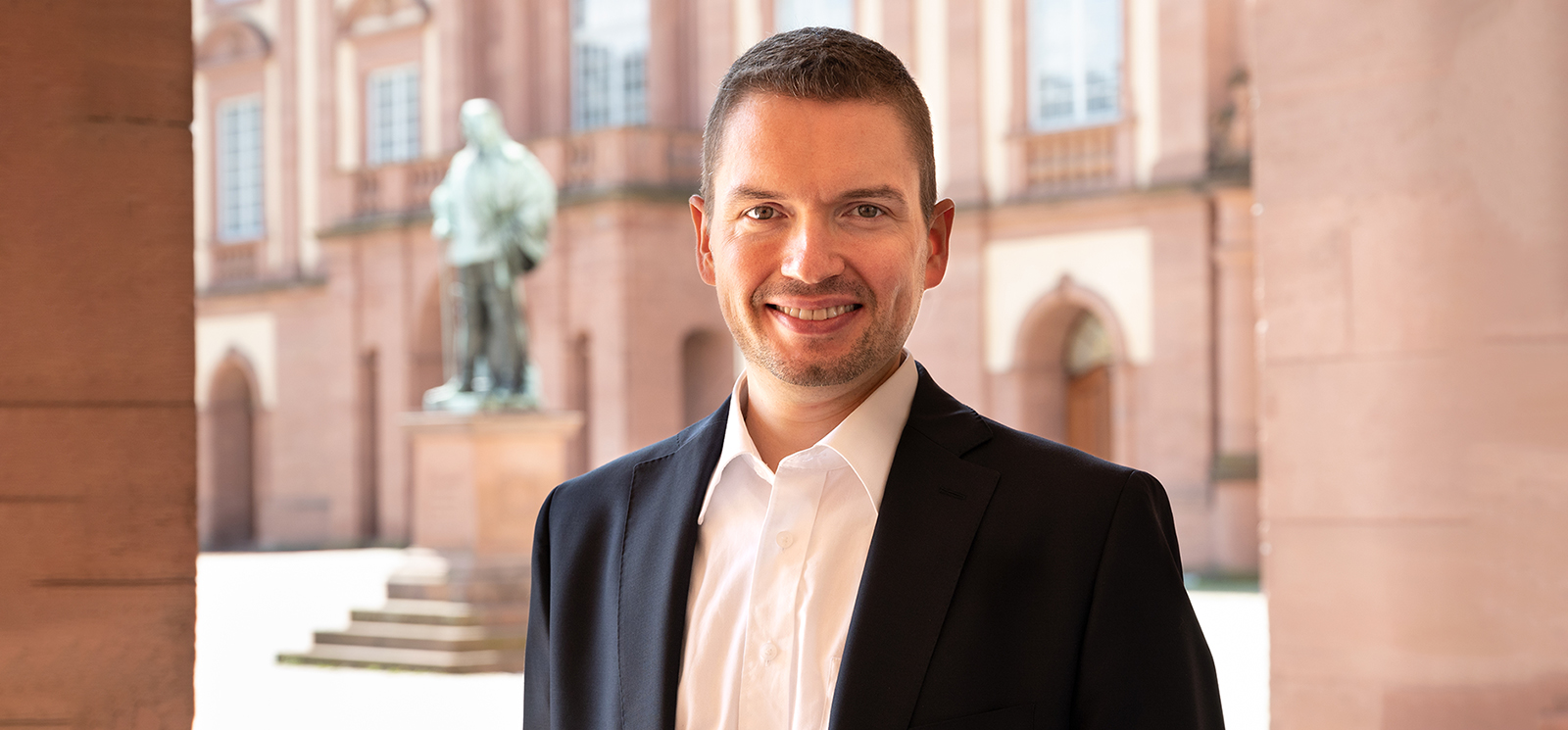
Photo: Rike Allendörfer, University of Mannheim
The three key learnings:
- Even with sensitive corporate data, open science is often more feasible than it initially appears. Provided that issues regarding usage, anonymisation and transparency are clarified at an early stage and both sides are willing to seek practical solutions.
- For Open Science to become part of everyday research practice, it must be taught to early-career researchers at an early stage and in a practical way – not as a guiding principle, but as a concrete skill.
- Particularly in the face of increasing ‘fake science’, Open Science can contribute to quality assurance – not through rigid openness requirements, but through clear minimum standards for transparency, traceability and the disclosure of methods, code and materials.
You conduct research into behaviour and performance in customer contact. As one can easily imagine, you work with company data, sensitive personnel data and information from cooperation partners. Where do you see the greatest limitations of Open Science in this area, and where do you see its opportunities?
FK: In my research, particularly on the behaviour of sales staff, I do indeed often work with highly sensitive data, such as performance metrics, remuneration systems or other personal information. The main limitation is therefore obvious. Complete openness is simply not possible in such contexts. Yet this is precisely where an opportunity may lie. Open Science forces us to become a little more creative, for instance through synthetic datasets, which can now be generated using new technical possibilities. This provides us with very detailed documentation of the data basis or a traceable disclosure of the modelling steps, without having to make the raw data itself accessible. , Open Science can even enhance the quality of research in such contexts, as it compels greater methodological clarity and transparency.
Could you briefly explain what you mean by synthetic datasets based on generative AI?
FK: Put simply, this refers to a data-based digital twin, for example of a sales representative. If sufficient information is already available on a person or a customer group, a generative model can be run locally using this data without disclosing the sensitive training data externally. On this basis, synthetic data can then be generated that realistically maps typical patterns, reactions or behaviours of, for example, this sales representative, without being identical to the original raw data. Such approaches are now also being tested in market research. There, the aim is, for instance, to train generative models based on existing customer data so that they can simulate typical customer reactions. The resulting synthetic datasets can then be used for analysis or illustration without having to work directly with the sensitive original data.
In your view, is marketing research open-minded enough when it comes to data, materials and analytical methods? And where do the typical structural hurdles still lie?
FK: Progress is being made, particularly in the experimental field, but the structural hurdles remain significant. A key problem continues to be publication incentives. The system is still heavily geared towards rewarding significant results. Yet non-significant findings can also be scientifically insightful, for instance when a plausible expectation is not confirmed. Although this is largely undisputed in principle, the incentive tends to be significance rather than transparency. Another hurdle is the lack of standardisation. Every journal handles open science slightly differently, including in marketing. This is not a problem unique to this discipline, but it makes it difficult to navigate and implement consistently. Added to this is the fact that in many areas of marketing research, we are heavily reliant on proprietary data. Particularly in business administration, and especially in marketing and sales, many interesting research questions arise in collaboration with companies. The relevant data for this often comes directly from the companies’ data treasure troves and cannot simply be published. This is also understandable. When companies make their data available for research purposes, they rightly expect sensitive information – such as details about customers or internal processes – to be treated confidentially. In this respect, marketing research is certainly evolving when it comes to open science, but it is doing so under conditions that do not always make openness straightforward.
How do you personally approach the issue of confidentiality? Do you prioritise the interests of companies because otherwise you wouldn’t have access to the data at all? Or have you found creative ways to better reconcile openness and confidentiality?
FK: I would say that Open Science is realistic in such contexts, but not in its most extreme form. Particularly when working closely with companies and relying on proprietary data, openness is not a binary issue, but a gradual one. In many B2B projects, full release of the raw data is often not possible. However, other forms of transparency can certainly be created, for example through very detailed documentation of the methodological approach, through the disclosure of selection decisions and analytical steps, or through the provision of the code. Even anonymised or partially released variables can be made accessible under certain circumstances. On a scale of 1 to 10, I can push it up to at least 9.5. In my view, it is crucial to clarify these issues as early as possible, ideally right from the project’s conception. If it is agreed with the company from the outset which forms of use, anonymisation and publication are possible, it is often possible to achieve significantly more transparency than one might initially assume. My approach is therefore to strive for as much openness as possible without infringing on legitimate confidentiality interests. In such projects, it is usually less about an ‘all or nothing’ approach and more about a well-balanced form of transparency.
Do you have any specific advice for researchers collaborating with companies? What would you advise someone who has little experience in such negotiations but at least wishes to make methods, questionnaires or other non-sensitive materials transparent?
FK: My first piece of advice would be to address the issue early on and openly. It should be made clear that the data is not only needed for internal analysis, but is part of academic work – that is, for publications, for dissertation projects and for the traceability of the research as a whole. The clearer it is on both sides what the data is used for and which forms of transparency make academic sense, the better. It is also important to allay companies’ concerns that publication automatically entails disclosure of their identity. This is generally not the case in research. Companies are usually described only in general terms, for example by sector, size or market environment, without any direct conclusions being drawn from this. At the same time, one should make clear the added value of the collaboration. Companies provide data and, in return, receive scientifically sound analyses, insights and often a final report with findings that may be relevant to their own operations. If this reciprocity is clearly stated, it is often possible to discuss constructively what forms of transparency are feasible, for example regarding methods, code, questionnaires or anonymised variables. In my view, it is crucial not to negotiate these issues only at the end, but to incorporate them into project planning as early as possible. Then the scope for manoeuvre is usually much greater.
Do you notice differences in how strongly open science practices are demanded, supported or viewed with scepticism by different journals? What developments are you currently observing there?
FK: Yes, these differences are clear. The leading top journals in our field, in particular, are placing increasing emphasis on open science practices. There, there is a stronger expectation that studies will be pre-registered and that data, materials or other research components will be documented and made available as comprehensively as possible. In other, lower-ranked journals, this trend is, in some cases, less pronounced . There, such requirements are often met with greater reluctance, and expectations regarding transparency and disclosure are often lower. This can give rise to a certain problem of fragmentation. Depending on which journal one wishes to publish in, different standards apply. In the leading journals, the requirements are significantly higher, whilst elsewhere they are still less binding. This is precisely where one of the central challenges lies at the moment.
However, this could also lead to early-career researchers saying: “I want to publish in the leading journals, but I don’t yet know exactly how pre-registration and other open science practices work in practice.”
FK: That is precisely why doctoral training plays such an important role. At the University of Mannheim, there are structured programmes within the Graduate Schools where doctoral candidates are systematically introduced to such topics, particularly in the early stages of their research training. These courses explicitly address issues such as the replication crisis, the transparent handling of data, and best practices for open science. So it’s not just a matter of discussing the topic in general terms; the courses also provide very practical guidance on how pre-registration works, what should be included in a study protocol, what typical pitfalls exist, and where data, code or additional materials can be usefully stored later on. This is particularly important for early-career researchers, because otherwise Open Science can quickly seem like an abstract ideal. Through training, it can be turned into a concrete skill.
Does Open Science fundamentally change the review process? And could technical verification procedures or AI-supported checks play a greater role in this in future?
FK: Yes, this makes the review process more demanding. It is no longer just about theory, methodology and findings, but also about reproducibility, pre-registration and the handling of data and materials. Technical verification methods could be helpful in this regard in future, but they are not yet widely established in marketing. I would be open to the idea, but would still view such systems with caution at the moment, because many methods are very specific and cannot easily be standardised for verification. For the time being, therefore, this responsibility continues to lie primarily with the reviewers.
Let’s move on to another point, namely the increasing amount of scientifically-sounding junk text, or ‘fake science’. Do business journals need even stricter requirements regarding pre-registration, data availability and the disclosure of materials to better ensure scientific quality?
FK: I would advocate a context-dependent approach here. Rigid rules often fall short in business administration, precisely because we are often working with sensitive or proprietary company data. If we were to demand maximum openness across the board, some studies could hardly be carried out or published under realistic conditions. In my view, however, clear minimum standards would make sense. In other words, requirements that ensure transparency and traceability without ignoring the practical realities of research. With regard to AI, paper mills and other forms of questionable publications, I would say that Open Science is more part of the solution than part of the problem here. The better research processes are documented, and the more clearly code, materials and methodological decisions are disclosed, the easier it is to ascertain what has actually been developed independently, and where text that has perhaps been hastily generated merely gives the appearance of science. It is precisely in this regard that Open Science can make an important contribution to quality assurance.
What do you consider particularly practical when dealing with corporate data?
FK: In my view, what is particularly feasible is open code – that is, the disclosure of the analysis code used – as well as pre-registration for experimental studies and, more generally, greater transparency regarding materials, meaning precise documentation of exactly what was done during the research process. The complete sharing of datasets, on the other hand, is more difficult. Particularly when all variables would have to be disclosed, one quickly reaches limits with corporate data, for example due to confidentiality agreements. Replications are also not always easy to carry out under such conditions if access to the underlying data is restricted.
What responsibility do business schools and universities have when it comes to teaching open science not only for research but also for future practice?
FK: A great one. We train not only researchers, but also future decision-makers. Precisely for this reason, transparency, traceability and methodological competence should be part of basic training. Anyone who will later bear responsibility, whether in business, consultancy, finance or industry, must be able to assess whether the information on which they rely is actually sound.
In your own research work, have there been specific instances where open science practices have noticeably improved your research process?
FK: Yes, definitely. A key point is clearer hypotheses. Pre-registration in particular forces you to consider very carefully at an early stage what the research question actually is and which hypotheses are actually to be tested. This step alone significantly improves the conceptual rigour of a project. Added to this is better documentation. If key decisions, data sources and analytical steps are clearly recorded from the outset, the entire research process becomes more transparent. And ultimately, this often leads to more robust analyses. When the research question, hypotheses and methodological approach are clearly defined, the likelihood that the results will be reliable and replicable increases. In this sense, open science actually acts as a quality filter for me.
Does this more intensive preparatory work also have an impact on collaboration with companies?
FK: Yes, definitely. You have thought through much more clearly in advance exactly what is needed, what the approach should look like and what effects can plausibly be expected. It is precisely these questions that corporate partners usually ask as well. What do you specifically need? How do you intend to proceed methodologically? And what do you hope to gain from it? It is particularly helpful, especially when collaborating with industry, to be able to answer these questions precisely . Corporate partners do not usually have access to the latest methodological research. Nor is that their role. This makes it all the more important to be able to explain one’s own approach in a comprehensible way – that is, which methods are being used, what results can realistically be expected, and where empirical testing remains open. In that respect, the two go very well together. Much of what Open Science demands in terms of early clarity and structure corresponds exactly to the information needs that partners in the field have in joint projects.
You mentioned earlier that even non-significant findings can be scientifically relevant. In your view, how open should we be when dealing with rejected hypotheses or null findings?
FK: Much more openly than has been the case so far. In my view, business administration in particular still has some catching up to do in this regard. Of course, it happens in many studies that individual hypotheses are not confirmed. However, if the majority of the expected effects fail to materialise, it often becomes difficult to publish a paper on the findings. And that is precisely where the problem lies. Because even such results can be scientifically insightful. If something is investigated repeatedly and no robust effect emerges, that is also an important finding. It suggests that what was theoretically expected may not actually be present in this context. At the same time, I am also aware that the question of the appropriate publication format arises. A full-length article reporting almost exclusively non-significant findings does not readily fit into every publication framework. Nevertheless, it would be important to document such results more systematically and make them more visible. In this respect, I would clearly state that non-significant results should be treated much more openly.
Where could rapid progress be achieved most easily to help Open Science become mainstream in business administration?
FK: Most likely where transparency can be increased at a reasonable cost, for example in experimental studies and in projects involving company data. An important first step would be to consistently define hypotheses precisely, document them clearly and make them accessible in a suitable form. Equally important is the complete documentation of the code used. In addition, at least the structure of the data should be disclosed, even if the data itself is not always fully shareable. What is crucial is the traceability of the research process. If such elements were to become standard practice, a great deal would already have been achieved. Much of this is fundamentally feasible and is, in fact, already required by some journals.
In your view, could business research gain credibility and social relevance if it placed greater emphasis on open science?
FK: I would say that the societal relevance of business administration is fundamentally not in question. When companies fail, jobs are lost or economic crises escalate, this has very concrete and far-reaching consequences. That is why it is of considerable importance to better understand how companies operate sustainably, how they build customer relationships, how processes can be designed efficiently and how economic stability is secured. This is precisely why credibility in business administration research is so important. When scandals, questionable practices or loss of trust occur, this damages not only individual studies but the perception of the discipline as a whole. Transparent and methodologically sound research can make an important contribution here. It strengthens the traceability of results and thus also the credibility of the discipline.
In your view, what would be a realistic step towards ensuring that open science is more widely accepted in business research without losing the discipline’s practical relevance?
FK: In my view, incentive systems are the key lever. Changes rarely take hold simply because they are demanded as a matter of principle. They become effective when they are institutionally rewarded and integrated into career paths. This is particularly relevant against the backdrop of the growing tenure-track system. Research careers today increasingly depend on clearly defined performance indicators, particularly publications. If these career paths were more closely linked to research that also meets certain open science standards, this would create an effective incentive to actually implement such practices. Part of this incentive system is already in place, as leading journals are increasingly demanding open science practices. Anyone wishing to publish in them must adhere to these standards. However, it would be even more effective if universities themselves were to take greater account, in their evaluation and tenure processes, of how research is conducted – that is, not only what has been published, but also whether it was carried out transparently, comprehensibly and with sound methodology. If open science is embedded in institutional incentive structures in this way, I believe that its wider adoption in business research is entirely realistic.
Thank you very much!
The interview was conducted on 27 March 2026 by Dr Doreen Siegfried.
This text was translated on 12 May 2026 using DeeplPro.
About Prof. Dr Florian Kraus:
Prof. Dr Florian Kraus is Professor of Business Administration and Marketing at the University of Mannheim and holds the Dr Werner Jackstädt Endowed Chair in Sales & Services Marketing. His research focuses, among other things, on sales management, service marketing, direct sales, solution-based sales, and hybrid combinations of products and services. Following his undergraduate studies, PhD and postdoctoral research in Marburg, he worked as a postdoctoral researcher at the University of Houston (USA) and as an Assistant Professor at Ruhr University Bochum before being appointed to Mannheim in 2011. Since 2013, he has also been Academic Director of the part-time and full-time MBA programmes at Mannheim Business School.
Contact: https://www.bwl.uni-mannheim.de/fakultaet/areas-und-lehrstuehle/faculty-profile/kraus/
ResearchGate: https://www.researchgate.net/profile/Florian-Kraus-7
LinkedIn: https://www.linkedin.com/in/florian-kraus-sales/