
Publishing openly together
ZBW is developing funding and support structures for Diamond Open Access
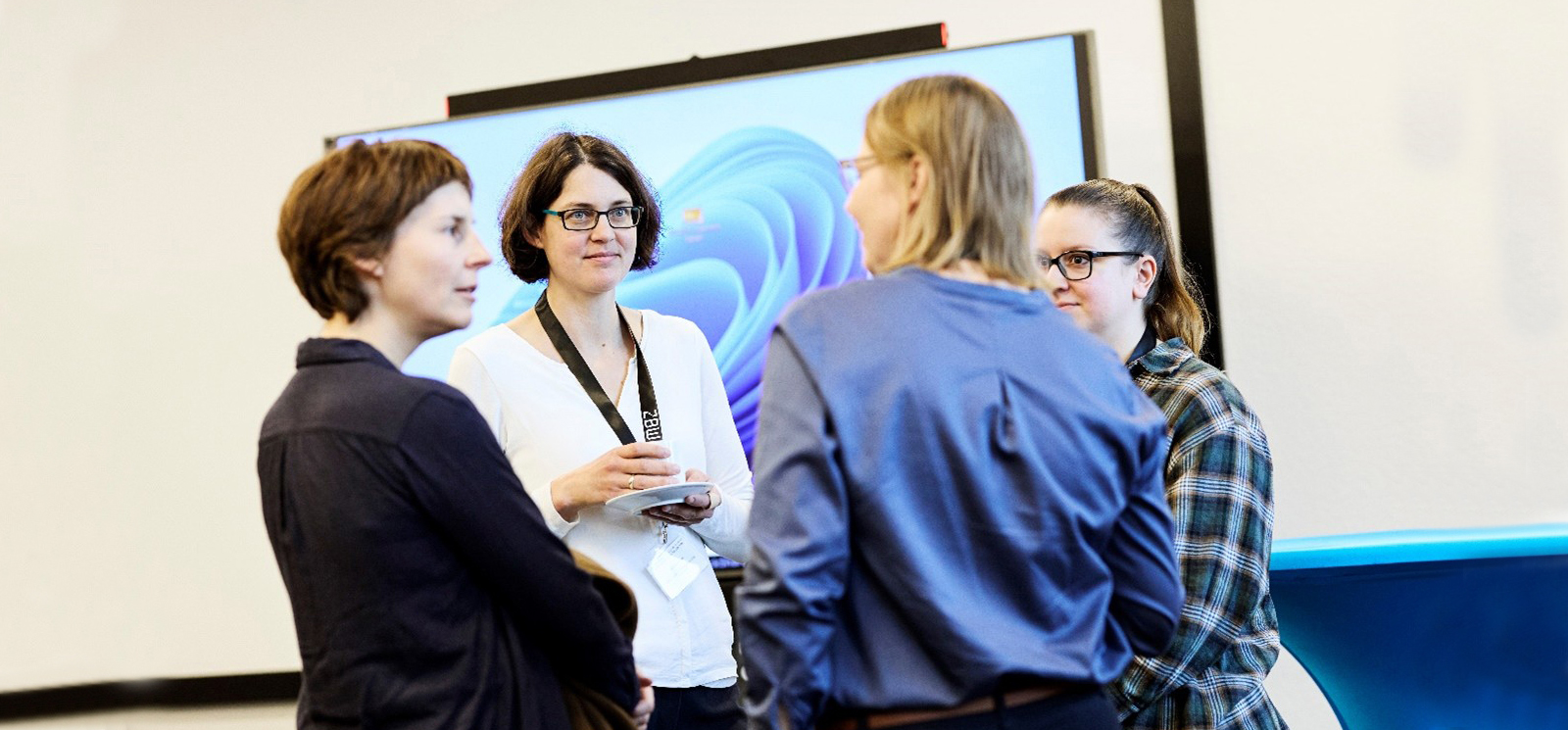
Photo: Maxim Schulz
Open Access is part of a trend towards Open Science that is transforming research processes and publication channels. Expectations regarding the accessibility and reusability of research results are rising, whilst at the same time new requirements are emerging in the areas of organisation, technology, law and funding. For the ZBW, this transformation is not a peripheral issue, but a field of work in which information infrastructures are taking on responsibility. Through various collaborations, the ZBW connects academic communities, develops models for open publication formats and creates reliable frameworks for quality, visibility and sustainability. The specific achievements in this area by 2025 are outlined below.
Establishing Diamond Open Access as a reliable practice
The ZBW follows a clear line in its efforts within the context of the open access transformation. Diamond Open Access – that is, research-led, non-commercial publishing at no cost to authors and readers – is to be strengthened where it is relevant to specialist communities and where sustainable structures can be established. The focus is on two complementary approaches that were visibly advanced in 2025: Open Library Economics (OLEcon) as a funding and transition model for economics journals, and participation in the Diamond Open Access Service Centre (SeDOA) as a national service centre, for which the ZBW is responsible for community support services. Together, they form a strategic contribution by the ZBW to the question of how Diamond Open Access can become sustainable in the long term, not only as a principle but as a reliable practice.
Making Diamond Open Access more resilient
What is the starting point? Diamond Open Access reduces barriers to access, but does not eliminate the work that makes scholarly publishing possible. Editorial work, quality assurance, platform operation, metadata, DOI registration, indexing, legal clarifications, accessibility and further development all require effort, regardless of whether article or subscription fees are charged. In many Diamond initiatives, key tasks are carried out through in-kind contributions, i.e. non-monetary contributions such as voluntary editorial work, technical support or institutional hosting. This form of resource utilisation can work, but it often remains tied to specific individuals and is difficult to safeguard in the event of staff changes or shifting priorities. Furthermore, costs and responsibilities are often not transparently documented because they are ‘included’ in staff positions or arise across several units.
Against this backdrop, the ZBW, through OLEcon and SeDOA, is addressing two areas that repeatedly prove to be bottlenecks in practice. One lever is funding. This involves key questions such as: Who bears which costs? How are funds pooled? How can sustainability be achieved? The other lever is support. How can knowledge, standards, advice and exchange be organised so that Diamond Open Access can be professionalised on a broad scale?
Funding and ensuring the sustainability of Diamond Open Access in the economic sciences
Through OLEcon, the ZBW organises the co-funding of Diamond Open Access journals in the field of economics via a funding consortium. OLEcon thus addresses a specific field – namely economics journals – and combines two tasks. On the one hand, the ZBW is committed to ensuring the financial sustainability of the journals; on the other, the OLEcon team, led by Dr Juliane Finger, supports publishers in the transition to research-led Diamond Open Access.
Funding mechanism
At the heart of the OLEcon model is the annual ‘pledging’ for a bundle of journals. Co-funding institutions – the OLE consortia – contribute a fixed amount for one year, scaled according to the size of the institution. The ZBW coordinates the consortium, organises the institutions’ participation and channels the funds raised by the consortium to the journals. This implements a collectively supported funding principle that does not rely on individual transactions, but on predictable contributions from a community.
OLEcon stands for research-led publishing. The academic editors have the final say, and the journals are non-commercial in nature. Publications are released under an open licence (CC BY), which allows for re-use and retains rights with the authors. OLEcon combines these editorial guidelines with pragmatic implementation strategies, including advisory services and, where appropriate, optional referral to non-commercial publication providers.
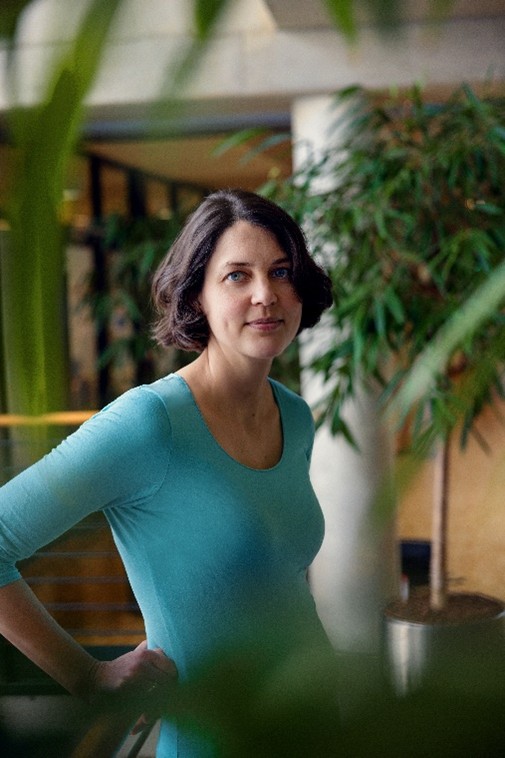
“If many institutions take joint responsibility, Diamond Open Access will become a permanent reality. The annual pledging process lays the groundwork for this and demonstrates that collaboration within the consortium is the foundation for sustaining research-led journals independently, openly and in the long term.”
Dr. Juliane Finger, OLEcon Project Manager
Photo: Pepe Lange
Key priorities for 2025 – Expansion and stabilisation
For OLEcon, 2025 was a year in which the groundwork laid earlier resulted in more robust structures. Four journals were co-funded by the funding consortium in 2025. At the same time, the expansion of the consortium was further advanced as part of the BMFTR project ‘OLEKonsort’ (2023–2026). The project provides additional funding for the consortium’s development and supports the transition from seed funding to an increasing share of consortium co-funding. Following approval by the ZBW’s advisory board, the ZBW will continue to fund the project until 2031.
An important aspect in 2025 was the community work surrounding the consortium. The ZBW engaged co-funders not only through payment processes, but also through information and dialogue. Newsletters, online information sessions, the provision of individual publication lists for institutions, and virtual community formats were designed to create transparency and foster long-term commitment among participants. In doing so, OLEcon responded to the practical reality that open access funding within institutions is often tied to budgetary considerations, acquisition processes and internal responsibilities. It was precisely these ‘how’ questions that were systematically addressed in 2025 and harnessed to ensure the model’s sustainability.
National support infrastructure SeDOA
Whilst OLEcon represents a subject-specific funding model, SeDOA addresses the cross-disciplinary question of how Diamond Open Access in Germany can become more coordinated, visible and manageable. SeDOA is being established as a DFG-funded collaborative project led by the University and State Library of Darmstadt and brings together services for publishers, publication services, libraries, professional societies and other stakeholders.
ZBW’s role in SeDOA
The ZBW is part of the SeDOA consortium and is responsible for establishing Community Support Services within the project. Open Access expert Helene Strauß from the ZBW-SeDOA team explains:
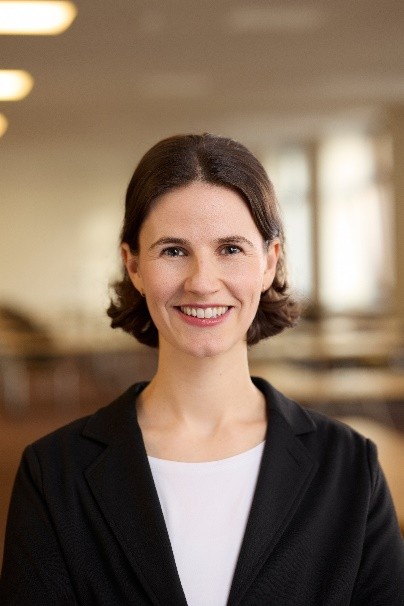
“Community work is strategically important because, in practice, Diamond Open Access often fails not due to a lack of willingness, but because of a lack of guidance, the absence of templates, unclear responsibilities and fragmented knowledge.”
Helene Strauß, open access expert from the ZBW-SeDOA team
Photo: Sven Wied
The ZBW’s contribution therefore aims to organise support in such a way that it can be utilised on a broad scale, across disciplines and organisational structures.
Community Support Services include, in particular:
- needs-based advisory and support services,
- workshops and forums for exchange,
- the development of a knowledge base,
- where necessary, the involvement of legal expertise, for example through expert opinions on recurring issues.
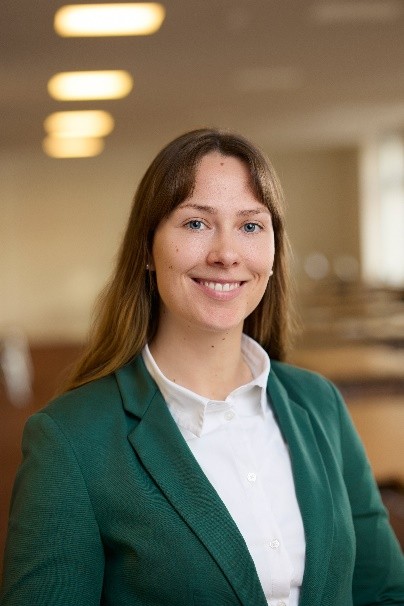
“Legal issues are often the point at which projects come to a standstill in Diamond Open Access. Who holds the copyright? Which licence is best suited to the publication’s objective? How can responsibilities, contracts and liability issues be clearly regulated? To provide guidance in this area, we bring together legal expertise so that sound decisions can be made.”
Bente Steinecke, SeDOA legal adviser
Photo: Sven Wied
SeDOA’s start-up phase and first community formats
2025 was the year of establishment, during which SeDOA became operational and offered its first community formats. For the ZBW, the central question was how to structure the exchange so that it addresses specific implementation issues rather than remaining at the level of general position statements. A detailed online survey and several workshops were used to identify the community’s needs and the formats they wanted for community support. Two online events are also illustrative of the ZBW’s dialogue with the community:
- Open Science Retreat (23–24 September 2025): Under the title ‘Diamond Open Access: Utopian Dream or the Only Fair Future?’, Dr Juliane Finger, an open access expert at the ZBW, placed Diamond Open Access within a broader open science context and discussed it with participants from various perspectives. The format facilitated in-depth discussions on the tensions between aspirations and practice, for example regarding resources, roles and the assumption of long-term responsibility.
- Online workshop “Diamond Open Access at State Level: Ideas, Perspectives, Exchange” (25 November 2025): SeDOA, together with state-level initiatives from North Rhine-Westphalia, Berlin, Brandenburg and the Saarland, hosted an exchange on funding and networking structures at state level. Four short presentations highlighted the status, framework conditions, measures and challenges facing the initiatives. A panel discussion focused on the transferability of experiences and the question of what role state-level commitment can play in the sustainable establishment of Diamond Open Access.
From the ZBW’s perspective, these formats fulfil a dual function. They foster networking among stakeholders and provide feedback for the design of Community Support Services. As a result, real needs – such as funding practices, integration into budgetary frameworks or accountability models – are not only made visible but can also be translated into concrete services.
OLEcon and SeDOA – Two levers for a shared vision
OLEcon and SeDOA represent different levers, but both serve a shared vision of the ZBW. Diamond Open Access is intended to be reliably operable as a research-led, non-commercial publication option. Reliability here encompasses three aspects: predictability, sustainable support and community anchoring.
What does this mean in practice? Reliability in the sense of good predictability means that costs, resources and responsibilities are organised in such a way that publication projects do not depend exclusively on individuals or temporary funding. Efficient and sustainable support encompasses advice, knowledge and practical assistance, provided in such a way that they can be utilised by many initiatives without having to start from scratch each time. Furthermore, for a stable transformation to take place, it is essential that the rights to the titles and decision-making authority lie with the numerous academic communities.
Five figures to bear in mind:
- 4 journals co-funded by the OLEcon consortium in 2025.
- 6 journals that OLEcon funded in total in 2025 (economics/business administration).
- 38 co-funding institutions in the OLEcon consortium in 2025 (Germany, Austria, Switzerland).
- 14 new institutions that joined the OLEcon consortium in 2025.
- 15 institutions in the SeDOA consortium
What happens after 2025?
We asked three open access experts involved in the OLEcon and SeDOA projects what the plans are for the period after 2025. Dr Juliane Finger, Head of OLEcon and OLEKonsort; Helene Strauß, open access communications officer for the SeDOA project; and Bente Steinecke, a lawyer and expert on licensing issues relating to open access.
In your view, what is the most important next step to ensure that Diamond Open Access remains sustainable in the long term?
Dr Juliane Finger: We need to further expand consortium-based funding models. The added value lies in spreading the burden across many shoulders. When institutions commit to making joint and recurring contributions, this creates a stable foundation that extends beyond the duration of individual projects. It is precisely this shared commitment that makes it possible to operate research-led journals in the long term.
Where do you see the greatest need for support services for the community?
Bente Steinecke: In practice, the same questions keep cropping up. How do we plan costs realistically? How do we clarify roles and governance? Which workflows are efficient, and which standards help with visibility and quality? Community Support Services should systematically address these recurring issues.
How will OLEcon and SeDOA work more closely together in future?
Helene Strauß: We want to link practical work and coordination more closely. Experience gained from OLEcon – for example, on how Diamond Open Access funding can be embedded within institutions’ budgets and processes – is valuable for SeDOA’s work. Conversely, SeDOA’s services can support OLEcon, for instance through knowledge, standards and exchange formats. Our aim is to bring together funding, support and community work in such a way that the focus is not on individual projects, but on robust structures for Diamond Open Access.
Thank you very much!
Recommended links:
https://olecon.zbw.eu/konsortium
https://olecon.zbw.eu/konsortium
https://diamond-open-access.de/home/sedoa-veranstaltungen
This text was written on 22 April 2026.
This text was translated on 30 June 2026 using DeeplPro.